
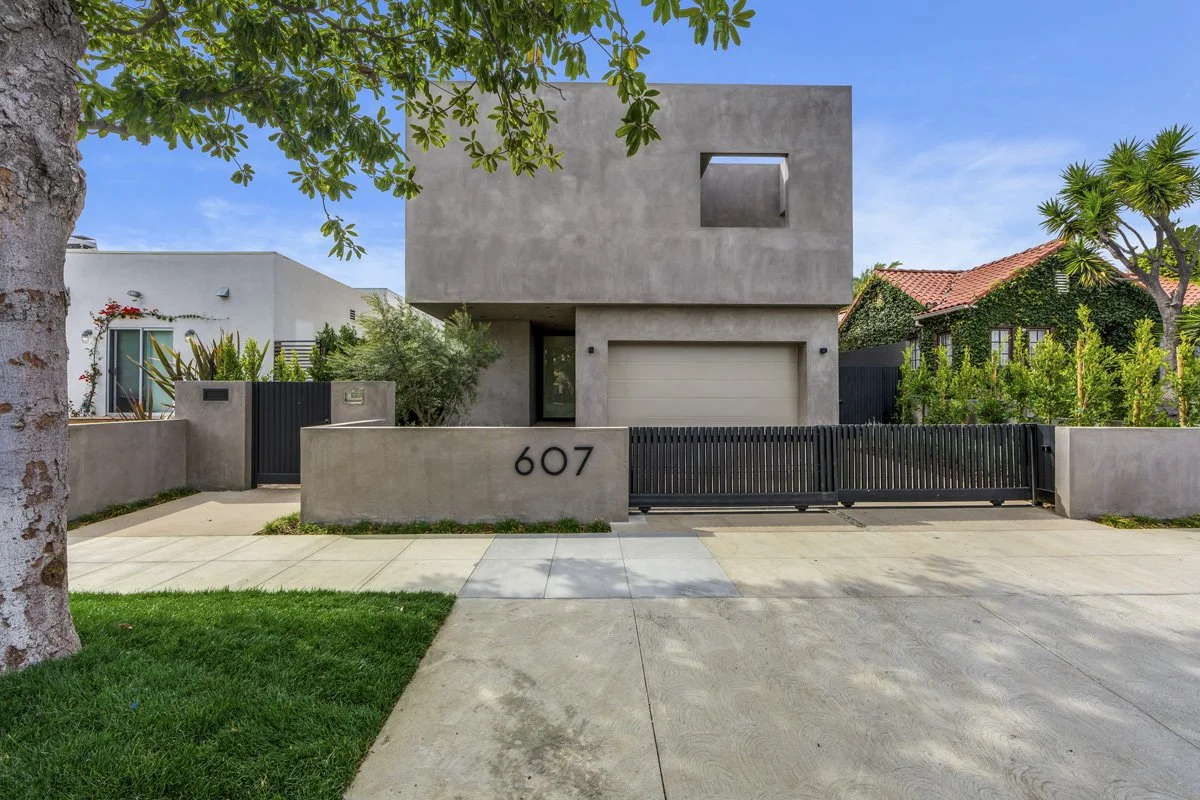
CUSTOM HOME VS REMODEL VS REBUILD IN LOS ANGELES
LOS ANGELES · DECISION GUIDEMOST HOMEOWNERS CHOOSE BEFORE THEY UNDERSTAND THE COST OF BEING WRONG. IN LOS ANGELES, THAT DECISION QUIETLY DETERMINES WHETHER THE PROJECT WORKS — OR NEVER QUITE DOES.
THE REAL RISK
When remodeling becomes
the more expensive choice
Most homeowners in Los Angeles start by leaning toward remodeling. It feels simpler. Less disruptive. More controlled.
But the real risk isn't choosing the wrong finish or layout. It's choosing the wrong path for the property itself.
In many projects, once structure, systems, and layout constraints are fully understood, the remodel is no longer the lighter option — it's the more expensive and more limiting one.
THE PROBLEM IS TIMING
Most people don't realize they chose the wrong direction until they're already deep into design or construction — when the plans are built, the budget is committed, and changing course becomes expensive.
By that point, the decision isn't "what's best." It's "how do we make this work."
Not sure if remodeling or rebuilding is even the right direction?
Some properties are better suited for expansion or adding a separate unit altogether.
→ Compare all paths in the full Los Angeles Property Decision Guide
THE SIGNALS MOST HOMEOWNERS MISS
What actually changes the math
on a Los Angeles property
Before committing to a direction, a proper evaluation usually surfaces a small set of conditions that consistently shift projects away from remodeling and toward rebuilding. These aren't design preferences. They're structural and financial signals — and most homeowners only discover them too late.
1
WHAT YOU SEEA crack in the foundation. Some settling. A few areas that need reinforcement.
Structural issues that don't stay contained
WHAT IT ACTUALLY MEANSOnce structural work enters the scope — foundation upgrades, seismic reinforcement, load-bearing changes — it rarely stays isolated. Costs escalate quickly, and the gap between remodel and rebuild closes fast, without delivering the same long-term performance.
2
A floor plan that can only be worked around
WHAT YOU SEERooms that feel off. Circulation that doesn't quite work. A layout that never fully flows.
WHAT IT ACTUALLY MEANSCeiling heights, stair placement, structural walls — these are fixed realities. A remodel can improve them. It rarely solves them. Homeowners often invest heavily and still end up living in a version of the same layout, just refined.
3
WHAT YOU SEEA project scope that keeps expanding — structure, systems, layout, finishes.
Remodel costs crossing the point of no return
WHAT IT ACTUALLY MEANSWhen a full remodel approaches roughly 60–70% of new construction cost, the financial logic changes. At that point, rebuilding typically delivers better value, more flexibility, and a stronger long-term outcome — often for comparable investment.
4
WHAT YOU SEEA house that looks functional on the surface.
Systems that change the story once walls open
WHAT IT ACTUALLY MEANSElectrical, plumbing, HVAC — in many older Los Angeles homes, these systems are near end-of-life. They don't show up clearly in early estimates, but once walls open, they become part of the scope. And once they do, the project is no longer a surface-level remodel.
A focused property walkthrough typically surfaces all four of these.
Most homeowners discover them after plans are already in motion — when changing direction is no longer simple.
EACH PATH IN DETAIL
Cost, timeline, and what to watch for
Here's how each path performs across the metrics that matter most in Los Angeles projects.
PATH 01 / 03
Full Home Remodel
A remodel preserves the existing structure and selectively upgrades systems, finishes, and layout elements. It's the right path when the home's bones are sound and the existing footprint can genuinely support your goals.
REMODEL MAKES SENSE WHEN
Foundation and primary framing are in good structural condition
The existing layout works with moderate adjustments
You want to preserve architectural character or period details
Zoning, historic overlay, or HOA restrictions limit rebuilding
The scope doesn't cross into full system replacement
WATCH FOR THIS
Older LA homes often reveal hidden conditions — outdated electrical, seismic deficiencies, plumbing deterioration — once walls open up. These affect both cost and timeline and rarely appear in initial estimates.
COST (LA) $250–$500+ /sqft
TIMELINE 6–12 months
DESIGN FLEXIBILITY Moderate
STRUCTURAL RISK Moderate-High
LONG-TERM VALUE Moderate
PERMITTING Moderate
BEST FOR Sound structure, layout-compatible goals
PATH 02 / 03
Tear-Down & Rebuild
A rebuild demolishes the existing structure and constructs new on the same lot. It resets structural integrity, mechanical systems, and layout — while preserving the property, location, and land value you already own.
REBUILD MAKES SENSE WHEN
Structural or systems issues are extensive enough to shift the cost calculus
The existing floor plan can't support modern living with adjustments
Remodel costs are approaching 60–70% of new construction value
Long-term property value and modern performance standards are priorities
The lot supports a stronger structure under current zoning
WATCH FOR THIS
Rebuilds in LA hillside areas, coastal zones, or HOA communities require careful coordination — grading approvals, Coastal Commission review, neighborhood design boards. Permitting complexity is real and should be planned for early.
COST (LA) $400–$650+ /sqft
TIMELINE 12–18 months
DESIGN FLEXIBILITY High
STRUCTURAL RISK Low
LONG-TERM VALUE High
PERMITTING High — plan early
BEST FOR outdated homes, strong lots, value-focused clients
PATH 03 / 03
Custom Home
Building a custom home from the ground up offers the highest level of design alignment. Every system, material, and spatial decision is made intentionally — around how you actually live, now and in the future.
CUSTOM HOME MAKES SENSE WHEN
You're building on a vacant lot or completing a teardown
Full control over layout, flow, materials, and systems is the priority
Long-term lifestyle alignment matters as much as resale value
Multi-generational living or future adaptability is part of the plan
The site, view, or topography calls for a purpose-built response
WATCH FOR THIS
Custom homes carry the longest timelines — especially in LA where hillside, coastal, and high-value properties involve multiple approval bodies. The investment in planning and architectural detail is real, and worth it when the vision is clear.
COST (LA) $500–$900+ /sqft
TIMELINE 14–24 months
DESIGN FLEXIBILITY Full
STRUCTURAL RISK LOWEST
LONG-TERM VALUE Highest
PERMITTING High — multiple bodies
BEST FOR Vacant lots, complete vision, long-term living
COST & TIMELINE REALITY
What the numbers actually mean in LA
These ranges reflect Los Angeles market conditions — not national averages. What matters more than the range is what drives the cost. Structural scope is the real variable.
| Path | Cost Range (LA) | Timeline | Design Freedom | Structural Risk | Long-Term Value |
|---|---|---|---|---|---|
| Remodel | $250–$500+ /sqft | 6–12 months | Moderate | Moderate–High | Moderate |
| Rebuild | $400–$650+ /sqft | 12–18 months | High | Low | High |
| Custom Home | $500–$900+ /sqft | 14–24 months | Full | Lowest | Highest |
The variable most homeowners underestimate: In Los Angeles, the moment a remodel includes structural changes, foundation work, or full system replacement, costs often move much closer to rebuild-level investment — without the same design freedom or long-term performance. The financial gap between paths closes faster than most people expect.
NOT SURE WHICH FITS?
LA Factors
Why this decision is
different here
Unlike most markets, Los Angeles adds meaningful layers of regulatory and environmental complexity. These factors don't just affect permitting - they affect which path is even feasible for a given property.
Pacific Palisades COASTAL ZONE
Mar Vista INFILL & ADU POTENTIAL
Studio City ,Hollywood Hills HILLSIDE & WUI
Calabasas HOA & GATED
Hancock Park HISTORIC OVERLAY
Brentwood TRADITIONAL &· HIGH VALUE
Hillside Grading Requirements
Slope projects require grading permits, soils reports, and often structural engineering separate from the building permit. These add cost, time, and coordination demands that vary significantly by neighborhood.
WUI & Wildland Urban Interface Standards
Homes in fire-prone zones must meet strict construction standards - Class A roofing, ember-resistant vents, ignition-resistant materials. Non-negotiable and affects material selections and cost from the start.
HOA Design Review Boards
Gated communities and HOA-governed neighborhoods add an approval layer governing architectural character, materials, and sometimes height and massing. Understanding HOA restrictions is part of early feasibility.
Historic Overlays & Preservation Rules
Certain neighborhoods carry historic designations that restrict exterior modifications or require preservation of architectural elements. These can rule out rebuilds entirely - or shape what a remodel can accomplish.
Lot Coverage & Zoning Envelopes
Setbacks, FAR limits, and local zoning rules determine what can actually be built on a given lot. These constraints affect both the feasibility and the financial logic of each path.
REAL PROJECTS · REAL DECISIONS
How each decision actually took shape across real projects
STARTED AS
The initial plan was to remodel, but the layout was broken up and didn’t flow — and the structure limited how much it could realistically be improved.
MAR VISTA · EXISTING HOME WITH LIMITATIONSWHAT CHANGED
Trying to open the layout meant working around structural limits not removing them — so the core issues would remain.
FINAL DECISION
Rebuild — eliminate constraints and design the home correctly from the start
STARTED AS
The plan started as a cosmetic remodel, but the layout blocked the experience — and the structure limited how much it could realistically be opened.
HOLLYWOOD HILLS · HILLSIDE HOMEWHAT CHANGED
Opening the layout required structural work and system coordination — not surface updates — so the scope shifted beyond cosmetic.
FINAL DECISION
Full structural remodel — rework the layout and align the home with how it should live
STARTED AS
The question was whether to rebuild, but the architecture had value — and the structure allowed it to be improved without losing what made it worth keeping.
HOLLYWOOD HILLS · MID-CENTURY HOMEWHAT CHANGED
Preserving the home meant upgrading layout and systems without overbuilding — so the approach shifted toward restraint.
FINAL DECISION
Restoration-focused remodel — preserve the architecture while improving function and livability
MALIBU · COASTAL PROPERTYSTARTED AS
The plan was a simple interior update, but once the space was opened, the layout and systems required far more than surface changes.
WHAT CHANGED
What began as cosmetic quickly became structural — with full system replacement and a complete reconfiguration of the space.
FINAL DECISION
Full gut remodel — rebuild the home from the inside out, aligning layout, systems, and flow with how it actually needs to live
WHAT CHANGED
The real value wasn’t just improving the home — it was expanding the property to support how it functions long-term.
STARTED AS
The plan was to remodel the main house, but the lot offered more — and the opportunity extended beyond the existing structure.
CULVER CITY · HOME WITH LOT POTENTIALFINAL DECISION
Hybrid — remodel the existing home and build a new ADU to expand function and long-term flexibility
STARTED AS
The question was whether to rebuild, but the structure could support expansion — and the issue was space, not the foundation.
WESTWOOD · FAMILY HOME EXPANSIONWHAT CHANGED
The existing structure became the asset — allowing the home to grow without starting over.
FINAL DECISION
Major addition — build up and rework the layout to expand the home without replacing it
STARTED AS
The decision was remodel or rebuild, but the architectural identity and context made preservation part of the value.
HANCOCK PARK · HISTORIC PROPERTYWHAT CHANGED
The priority shifted to preserving what mattered — while expanding and upgrading the home to support modern living.
FINAL DECISION
Historic restoration — preserve the architecture while adding new space and rebuilding systems for long-term use
STARTED AS
A blank starting point — no existing structure, no constraints to work around.
BRENTWOOD · EMPTY LOTWHAT CHANGED
The entire project could be defined upfront — with layout, structure, and systems aligned before construction begins.
FINAL DECISION
New build — design the home from the ground up with full control over layout, structure, and long-term performance
OUR SIGNATURE APPROACH
We don't push scope.
We evaluate it.
Our role is not to steer you toward the largest project. It's to help you understand the real implications — structurally, financially, and long-term — before you commit to a direction. Sometimes the smartest move is a strategic remodel. Sometimes it's a clean rebuild. The right answer is always property-specific.
01
STRUCTURAL EVALUATION
We assess existing conditions honestly — framing, systems, foundation — before any path is recommended.
02
COST MODELING
We run real comparisons across paths so you understand the financial logic, not just the surface price.
03
TIMELINE PROJECTIONS
We account for LA-specific permitting timelines — hillside, coastal, HOA — so expectations are accurate from day one.
04
LONG-TERM STRATEGY
Resale, investment, lifestyle alignment — we look at the full picture, not just the project in front of us.
FREQUENTLY ASKED
Questions we hear before every project
The answers are rarely simple — but here's honest guidance on what most people are thinking through.
-
Because the full scope of a project is rarely visible until walls open. In older Los Angeles homes especially, what looks like a targeted upgrade on the surface often reveals outdated electrical, compromised framing, seismic deficiencies, or plumbing near end-of-life once construction begins. Each discovery adds to the scope — and by that point, stopping or changing direction is expensive. The projects that stay on budget are the ones where the property was properly evaluated before plans were finalized, not after.
-
The clearest threshold is when remodel costs approach 60–70% of new construction value. But the real signal comes earlier — when the scope starts including structural reinforcement, foundation work, full system replacement, or significant layout reconfiguration. Each of those shifts the math. When two or more appear in the same project, the case for rebuilding becomes hard to ignore. A property walkthrough before committing to a direction is the only reliable way to know where you actually stand.
-
Almost always the layout. Finishes can be updated. Systems can be replaced. But if the floor plan never really worked — the ceiling heights, the circulation, the relationship between rooms — a remodel can't solve that. The homeowners who regret it most are the ones who knew the layout was the problem but hoped the remodel would fix it anyway. The investment goes in, the project finishes, and the house still has the same fundamental constraints.
-
It does — and it usually shifts the math toward rebuilding or a more comprehensive scope. In Los Angeles, buyers in higher-value neighborhoods respond strongly to modern construction standards, updated systems, and structural integrity. A heavily remodeled older home that still carries structural limitations or dated systems typically commands less than a rebuild or custom home. If resale is part of the calculation, the decision should be evaluated with long-term value as a primary input, not an afterthought.
-
Permitting. Los Angeles adds layers of approval complexity that most other markets don't have — LADBS processing times, hillside grading requirements, Coastal Commission review for coastal properties, HOA design board approvals, and WUI fire standards for homes in high-risk zones. These aren't delays that can be avoided — they're built into the process. Projects that account for them from the start stay on schedule. Projects that don't get surprised. We build realistic timelines before anything is designed, not after.
-
It depends on how far the plans have progressed. If you're early in schematic design, changing direction is still manageable — the cost is real but recoverable. If construction documents are complete or permits are submitted, the cost of pivoting is significant. This is exactly why we recommend a structural and feasibility evaluation before engaging an architect rather than after. That said, if something has surfaced during the design process that's changed the picture — a structural finding, a scope that's grown beyond the original budget — it's always worth a conversation before committing further.
Most homeowners figure this out
in one focused conversation
NEXT STEP
If you're deciding between remodeling, rebuilding, or starting fresh, we can walk your property and help you understand what actually makes sense — before you commit to plans, architecture, or scope.
Most people come in thinking they already know which path they want. About half change direction after we walk the property.
No pressure. No pitch. Just an honest evaluation of what your property supports.