
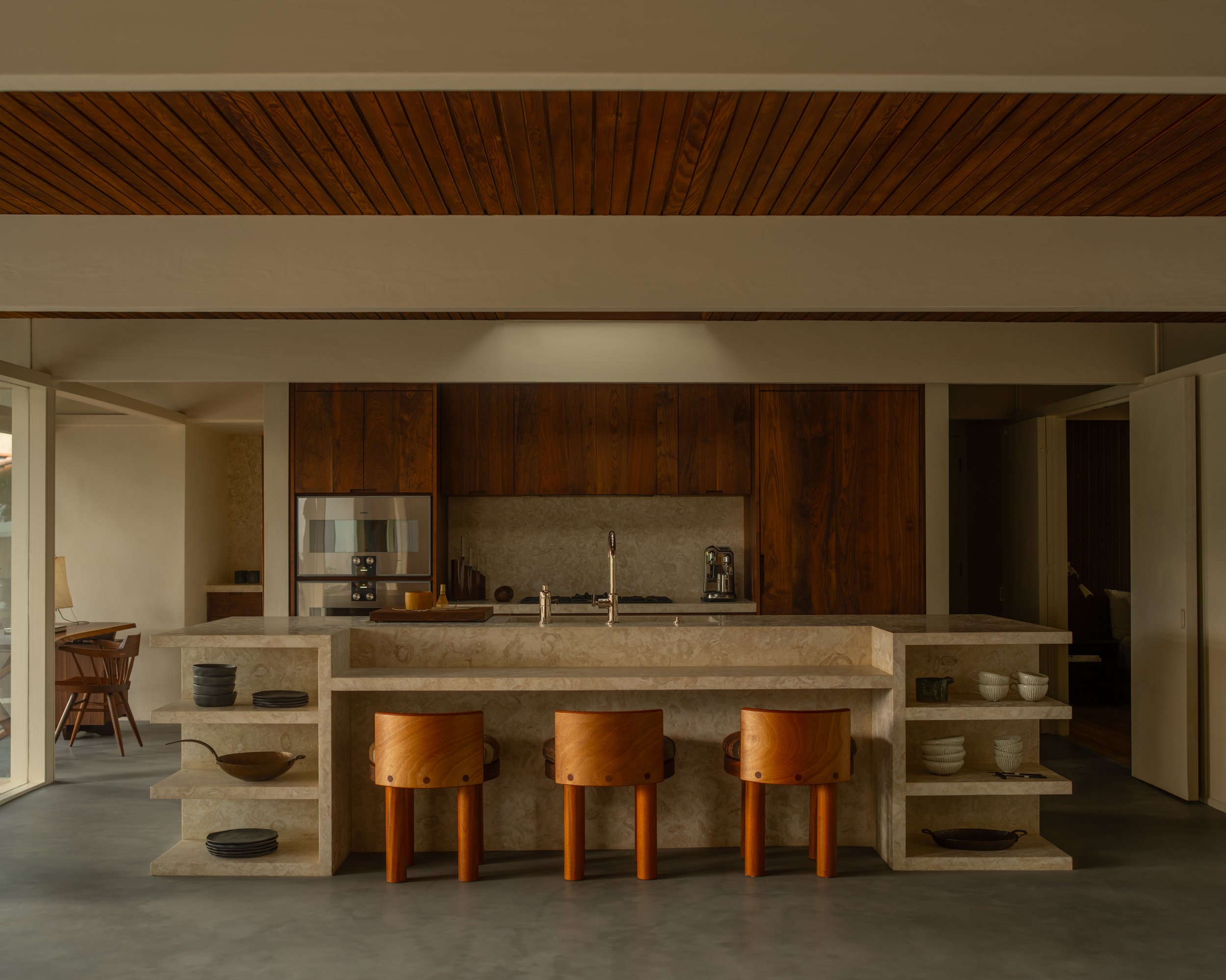
HOLLYWOOD HILLS MID-CENTURY RESTORATION
THE STORY
LOCATIONLos Angeles hillside neighborhood
SERVICEInterior, layout, and finish coordination
Mid-Century Restoration
PROJECT TYPEPreserving original architecture while upgrading for modern living
Indoor–Outdoor Living
LIVING STYLEExpanded deck, pool, and outdoor kitchen integration
Restoration + Reconfiguration
PRIMARY FOCUSKitchen expansion, outdoor connection, and preserving character
Classic + Timeless + Mid-Century
OVERALL FEELOpen, light-filled spaces that respect the original architecture
This Hollywood Hills project focused on restoring a mid-century home without losing what made it special in the first place.
The goal wasn’t to reinvent the house. It was to bring it forward opening the layout, improving daily function, and strengthening the connection to the outdoor spaces while preserving the original lines and character that defined it.
The Challenge
A mid-century hillside home with strong bones and a layout that no longer supported how it was lived in.
The main living spaces didn’t fully connect to each other or to the outdoors. The goal wasn’t simply to update finishes it was to open the house up, improve how it functioned day to day, and modernize it carefully without losing the original mid-century character that defined it.
The house already had a lot going for it: natural light, elevation, and a clear architectural identity. The original mid-century lines, proportions, and materials gave the home a strong foundation worth preserving.
But the layout interrupted that experience.
The kitchen was small and closed off from the main living area. The connection to the outdoors felt limited, especially for a hillside property where the exterior should feel like part of the living space. Finishes and materials were outdated, and key areas like the kitchen and bathrooms no longer supported a higher standard of comfort.
The challenge wasn’t just updating the house it was deciding how far to go.
That’s the point where many projects shift — from improving a home to deciding whether a different path makes more sense.
→ See how the remodel vs rebuild decision actually plays out
Opening the layout, improving flow, and upgrading systems had to be done without flattening the character that made the home what it was. Projects like this require restraint as much as vision.
The goal was to create a home that feels more open, more functional, and more connected to its setting while still feeling unmistakably itself.
WHAT GUIDED THE RESTORATION
✔️ Mid-century homes rely on proportion, light, and simplicity those principles had to remain intact
✔️ Opening the layout required structural changes without compromising the original architectural lines
✔️ The goal was not to make the house feel new, but to make it feel right for how it’s used today
Planning a similar project?
We work with homeowners across Hollywood Hills, Brentwood, Pacific Palisades, West Hollywood, and greater Los Angeles.
Our Approach
How we approached the restoration
The first step was understanding what the house already had and what was worth keeping.
On a mid-century home like this, the proportions, materials, and relationship to the landscape are not accidental. They define how the space feels. The goal was not to override that, but to work within it.
The kitchen became the central focus. It was too small and too closed off for how the home was being used, but opening it required more than simply removing a wall. The structure had to be carefully reworked opening the space while preserving the original architectural lines that gave the home its identity.
From there, every decision followed the same logic: what improves the way the home functions, what strengthens the connection to the outdoors, and what can be preserved rather than replaced.
Structural work and system upgrades came first bringing the home up to current standards followed by layout refinements, and finally finishes. That sequencing ensured the design didn’t rely on surface-level fixes to solve deeper problems.
The finish palette was intentionally restrained. Original woodwork was preserved and refinished, and new materials were selected to sit comfortably alongside what was already there.
When a home has this level of architectural identity, the goal is not to compete with it — it’s to clarify it.
Behind the Build
The work behind the finished spaces.
The finished home feels calm and effortless, but getting there required careful coordination at every stage not just to improve the layout, but to preserve what made the house worth restoring in the first place.
BEFORE — ORIGINAL CONDITION
The home had strong architectural character, but the way it functioned didn’t reflect that.
The kitchen was enclosed and undersized, limiting how the main living spaces connected. Light didn’t move through the house as it could have, and the relationship to the outdoors felt weaker than the setting allowed.
Many of the original materials were still present, but they were buried under outdated finishes and a layout that no longer supported how the home was used.
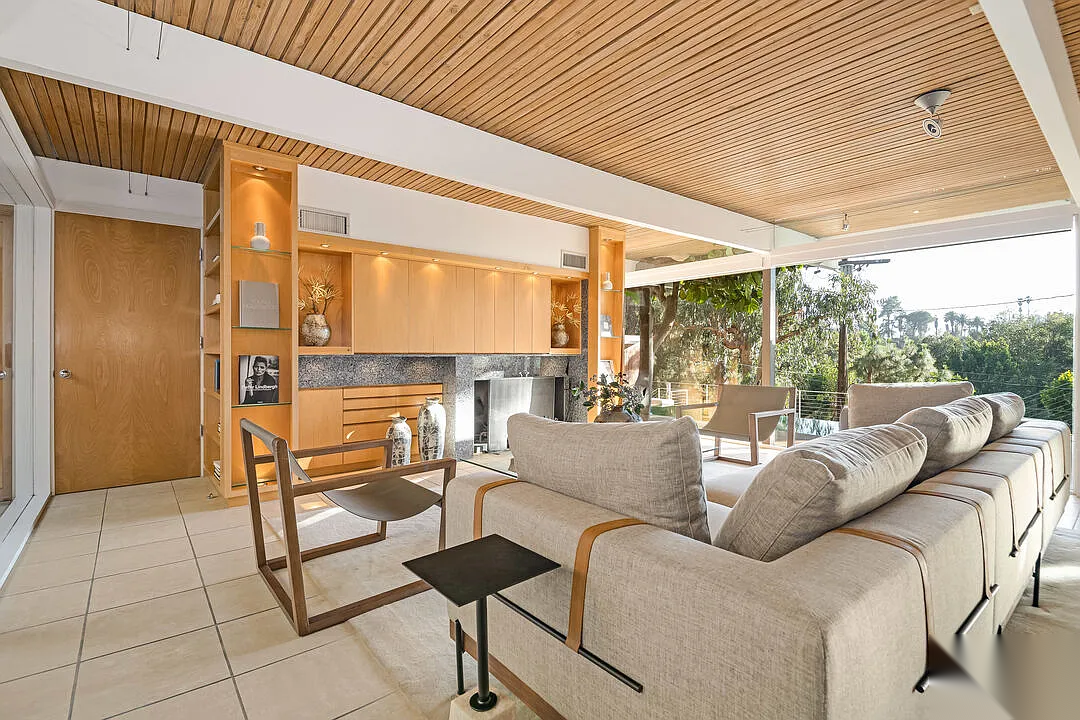
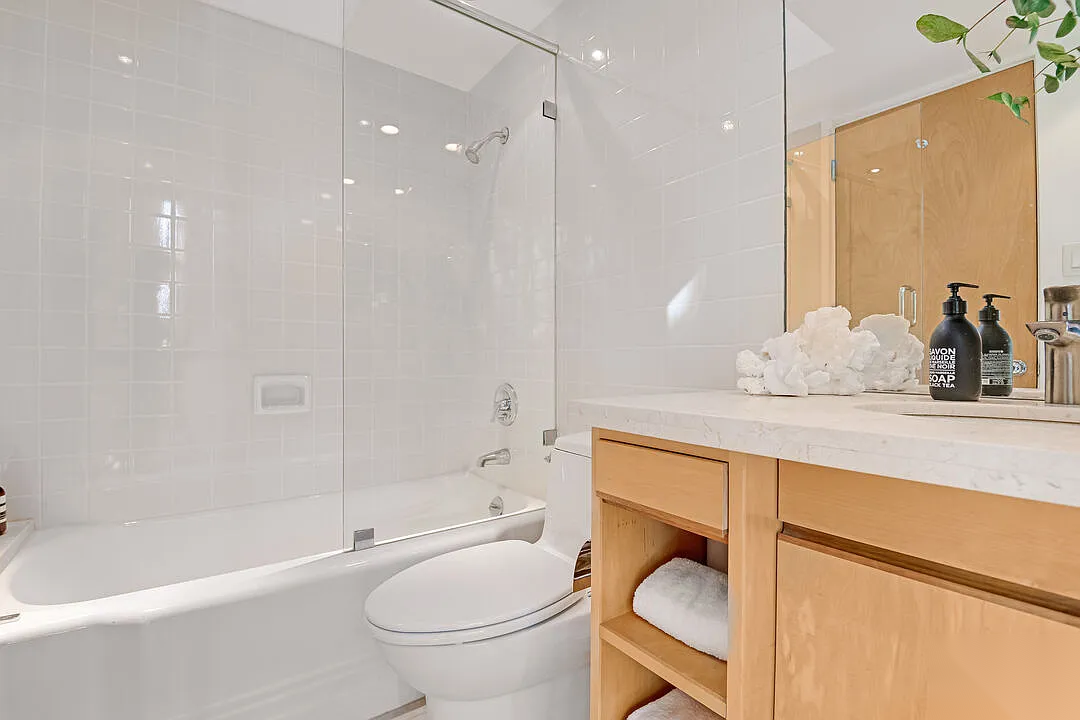
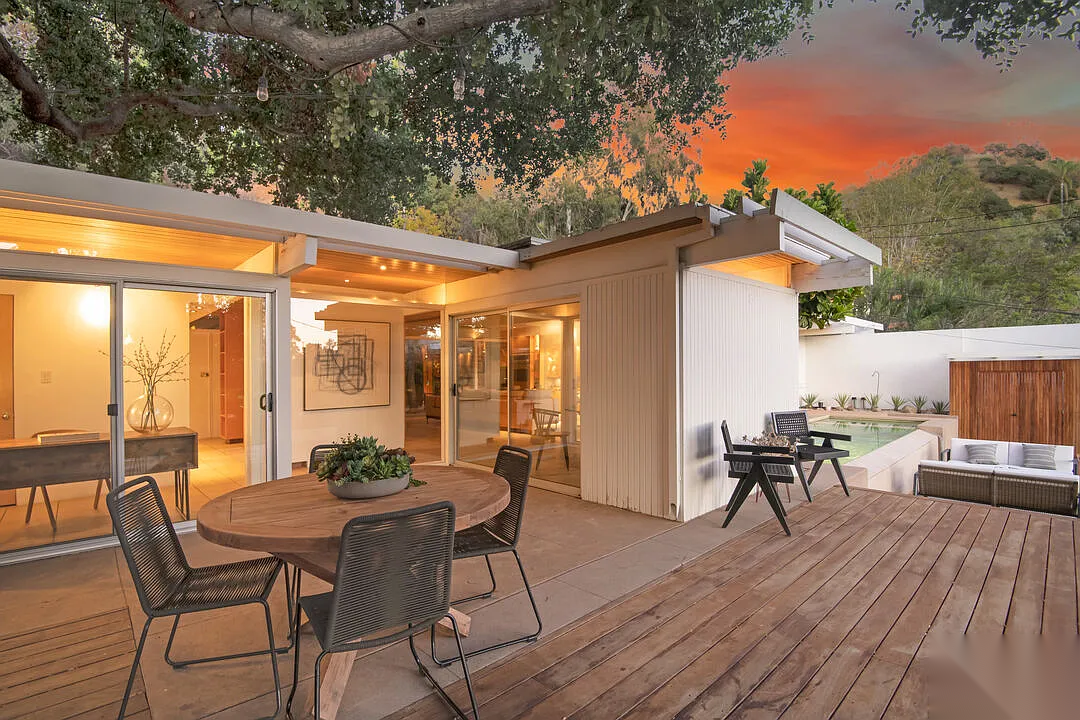
DURING — IN PROGRESS
The work focused on opening and refining the home without erasing its identity.
The kitchen was expanded and reworked to connect directly to the main living area, with structural adjustments made to support the new layout while maintaining the original architectural lines.
At the same time, the foundation was reinforced to meet current code a critical step for a hillside property and all major systems were replaced, including electrical, plumbing, and HVAC.
These upgrades allowed the home to function at a modern standard without changing what made it worth restoring.
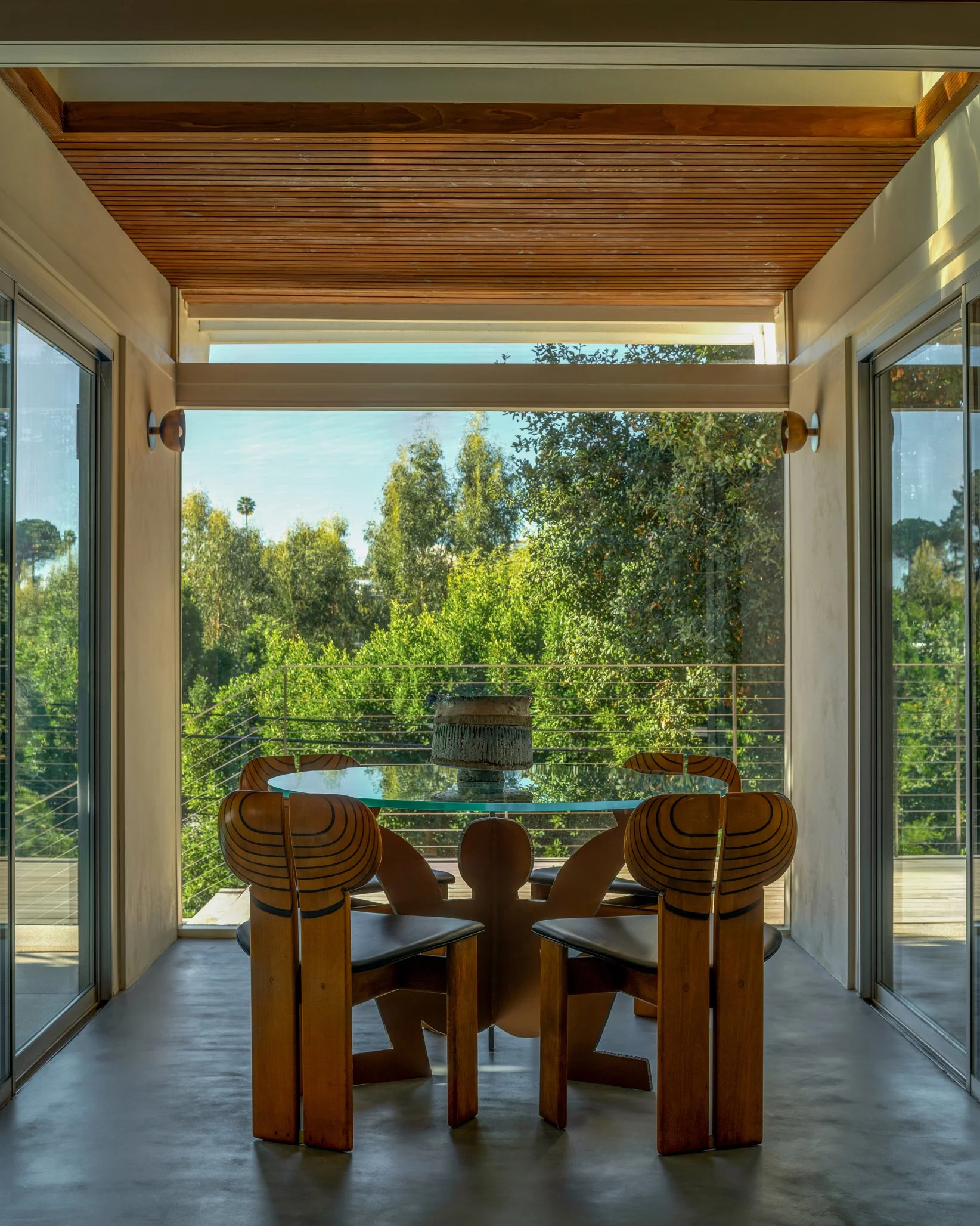
Original wood elements were carefully restored and integrated into the updated design, while new materials were introduced in a way that felt consistent rather than contrasting.
This is where the real work happens.
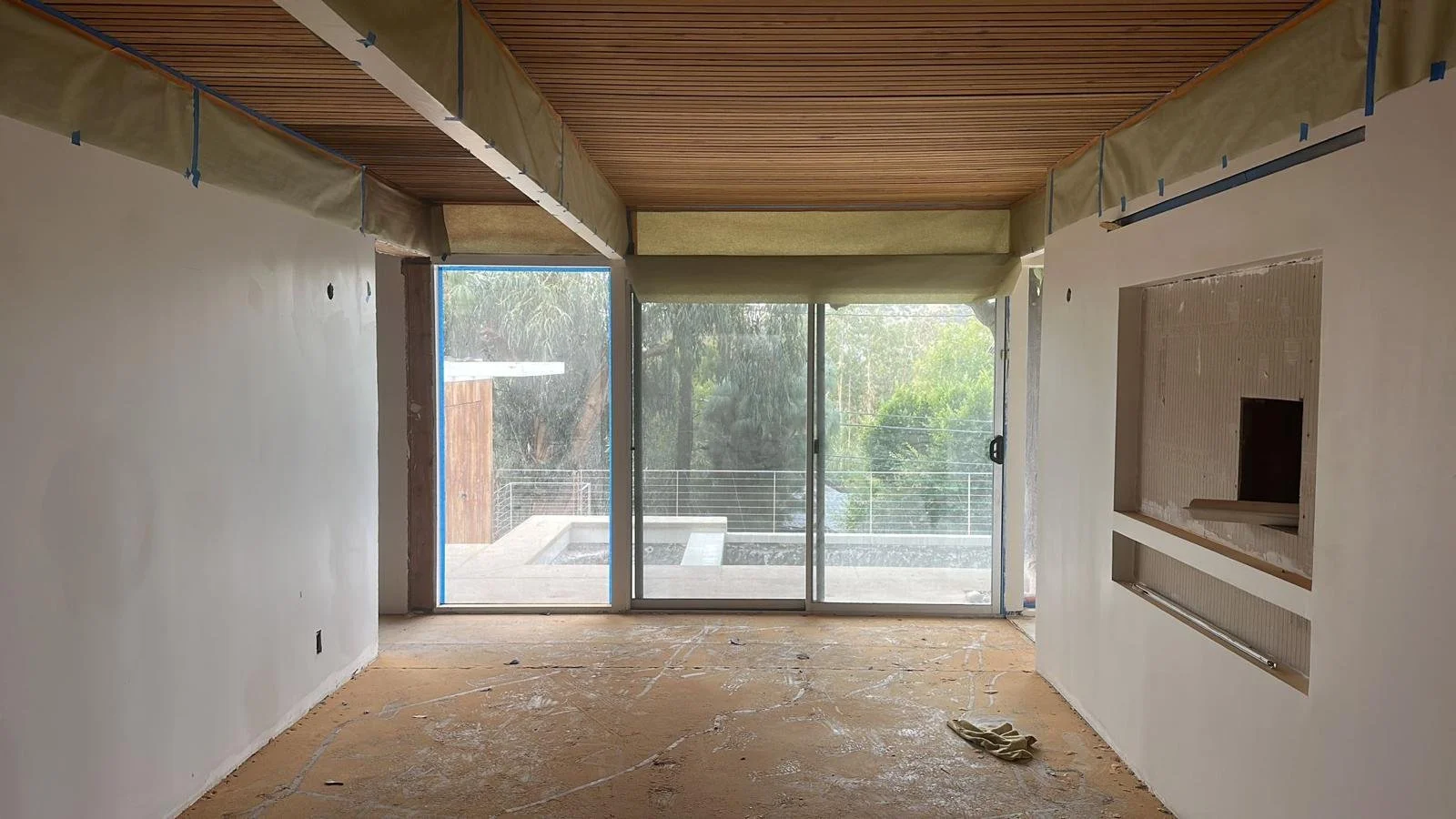
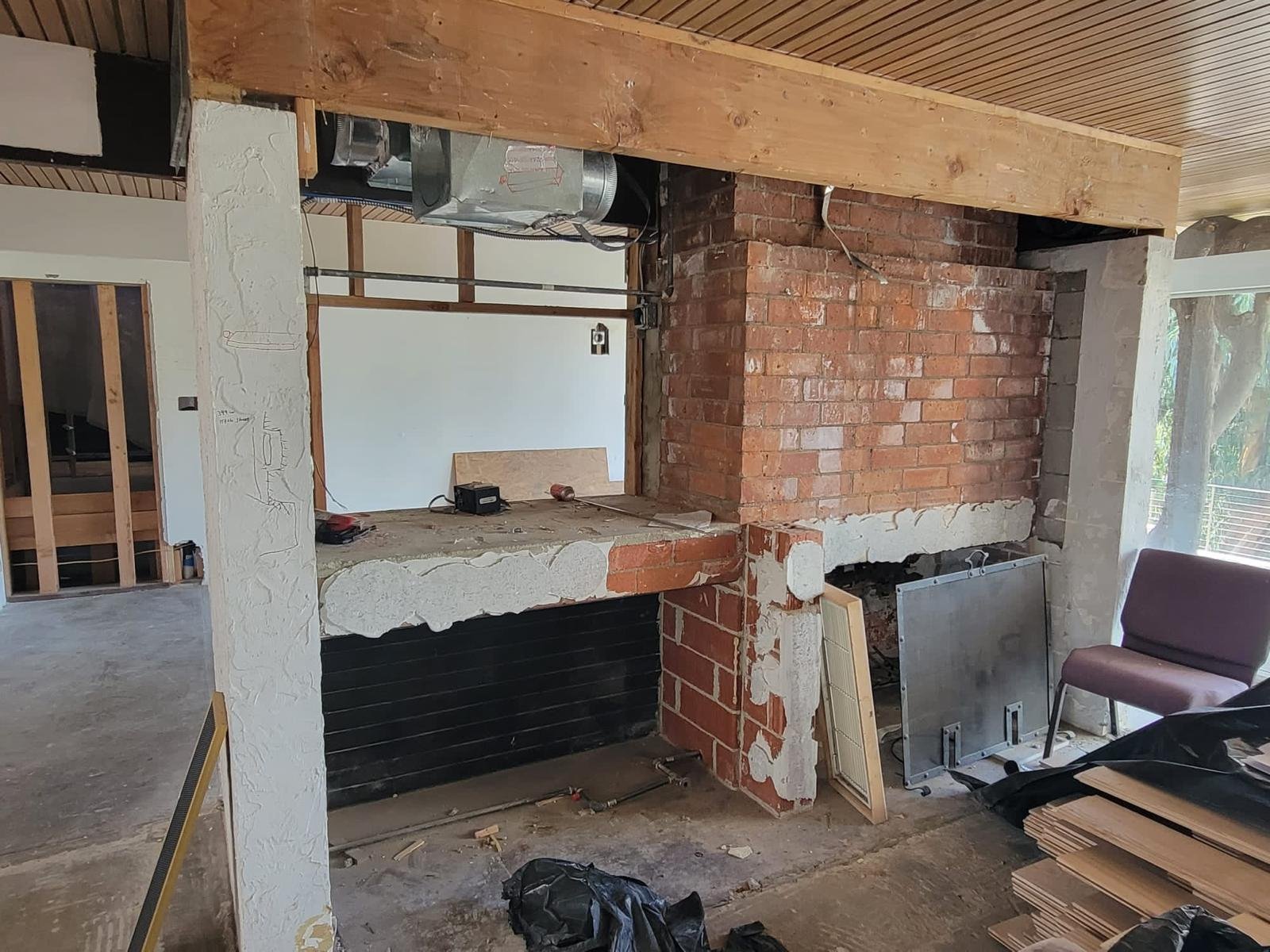
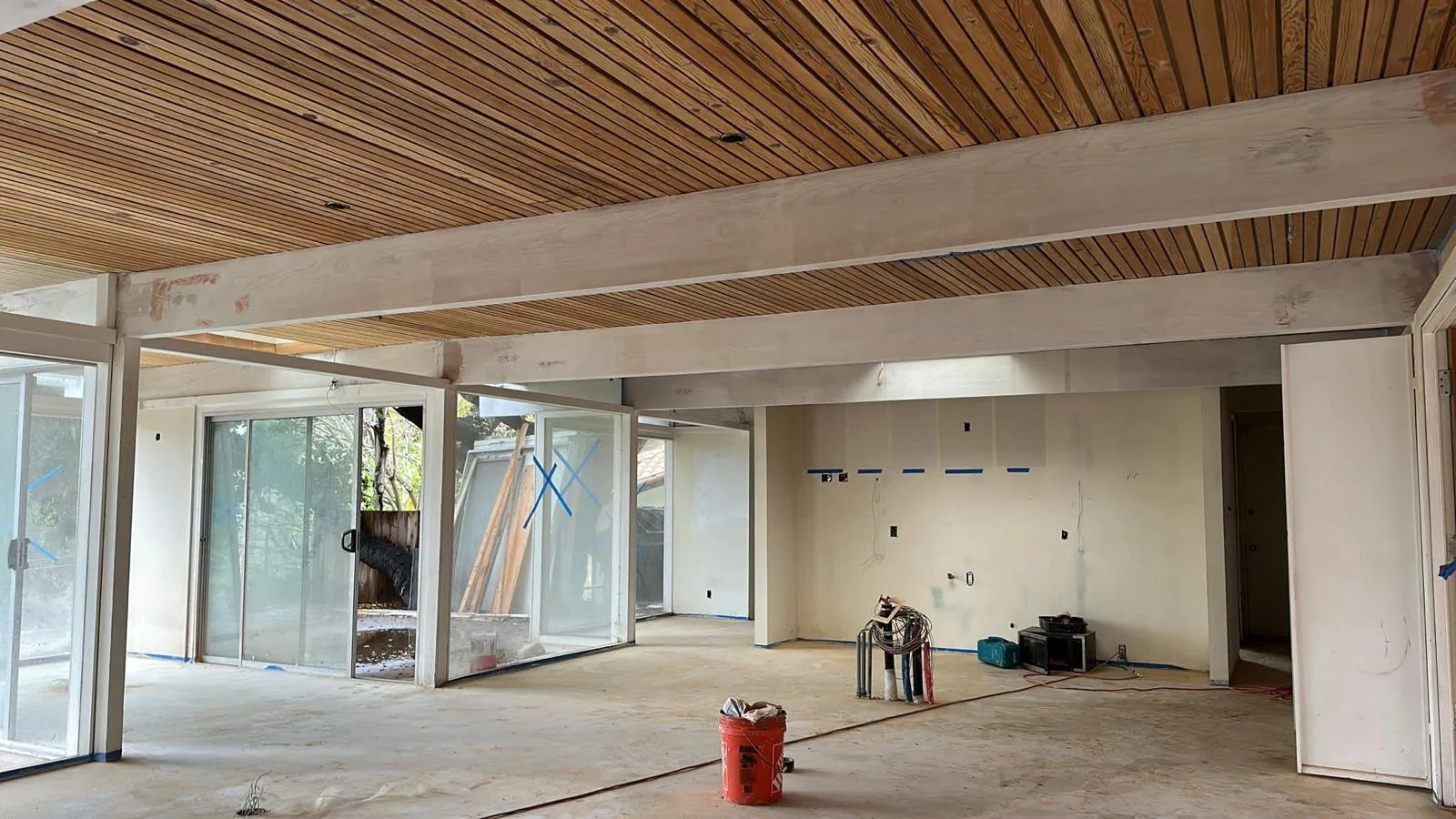
By the time finishes began, the structure, systems, and layout were already aligned allowing the final spaces to feel cohesive rather than assembled.
Key Decisions
The decisions that shaped how the home now feels.
Every successful restoration comes down to a few critical decisions. These were the moves that allowed this home to function at a higher level while preserving what made it worth restoring in the first place.
1
OPEN THE KITCHEN WITHOUT LOSING THE ARCHITECTURE
Expanding and opening the kitchen was the most impactful move, but it required careful structural rework to maintain the original lines and proportions. The result is a space that feels connected without feeling altered.
2
PRESERVE AND REFINE ORIGINAL MATERIALS
Instead of replacing everything, original woodwork and key finishes were restored and integrated into the updated design. This kept the character intact while elevating the overall quality of the space.
3
STRENGTHEN THE INDOOR–OUTDOOR CONNECTION
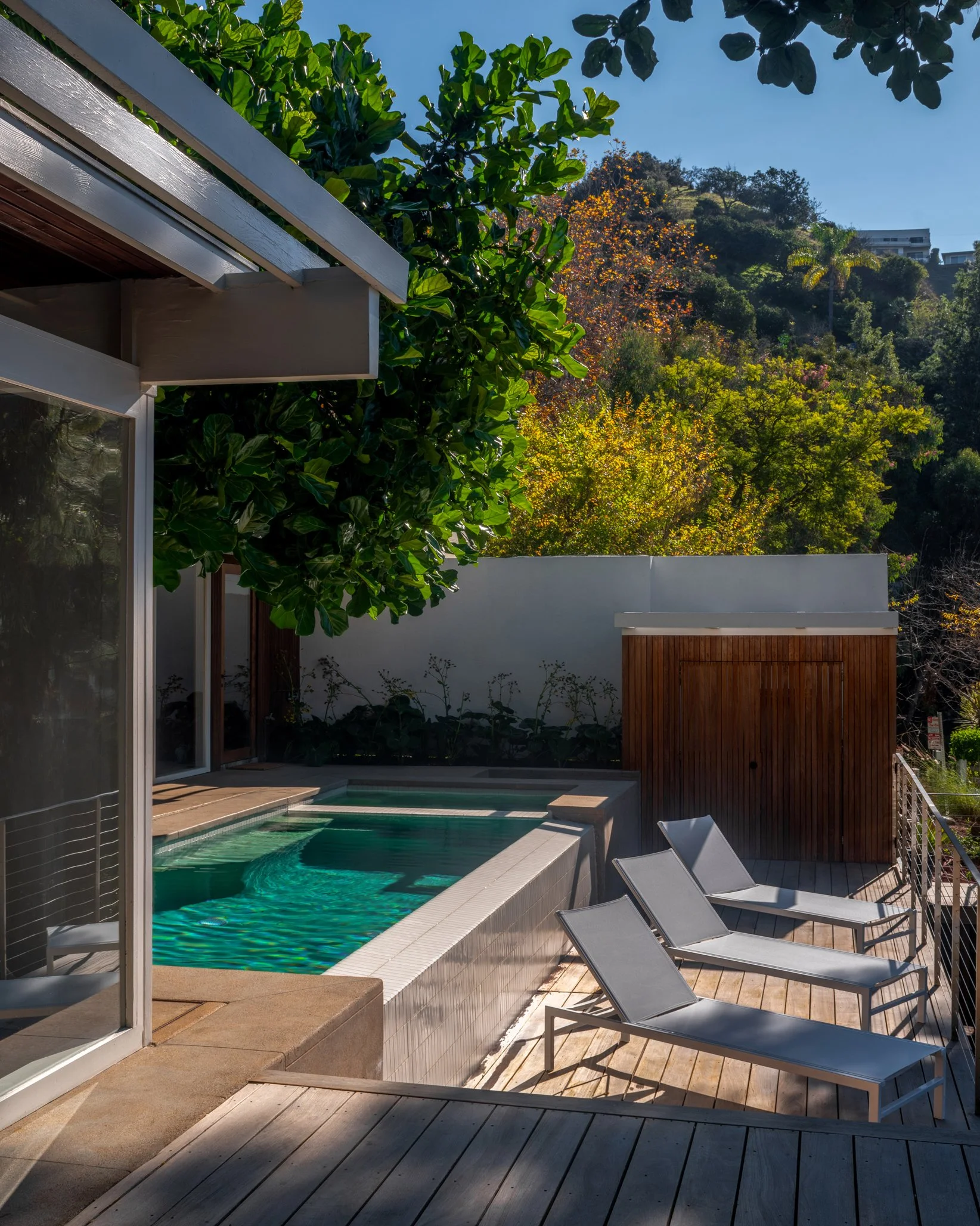
The deck, pool, and outdoor kitchen were reworked to feel like a natural extension of the interior. The goal was not to add more — it was to make the existing relationship to the outdoors actually function.
4
REWORK KEY SPACES FOR DAILY USE
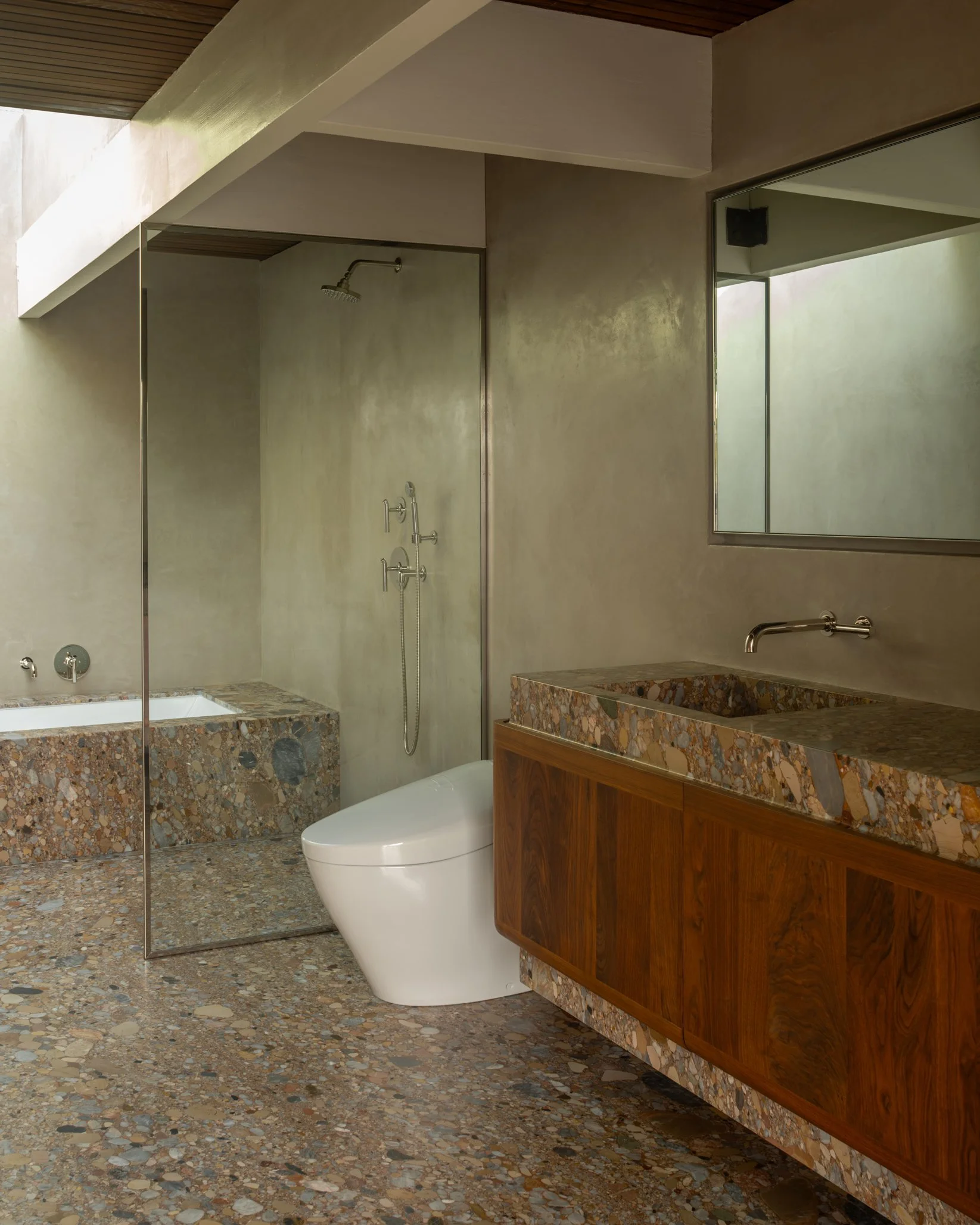
Bathrooms and supporting spaces were redesigned to meet a higher level of comfort and usability, aligning the functionality of the home with how it is actually lived in.
5
KEEP THE FINISH PALETTE RESTRAINED
New materials were selected to sit comfortably alongside the original architecture. The focus stayed on clarity, warmth, and continuity rather than contrast or excess.
6
LET THE ORIGINAL ARCHITECTURE LEAD
The updated design followed the logic of the existing structure rather than introducing competing ideas. That approach allowed the home to feel cohesive and intentional rather than layered or overworked.
Before & After
Drag to reveal the transformation.
Project Timeline
10 months from approvals to handover.
Planning + permits
Structural review, design coordination, and permit approvals, aligning the restoration scope with the existing architecture.
PHASE 1PHASE 2Demo + structure
Selective demolition, structural rework to open key spaces, and foundation reinforcement to meet current hillside requirements.
PHASE 3Systems
Full replacement of electrical, plumbing, and HVAC systems, integrated with the updated layout and restoration approach.
PHASE 4Finishes
Refinement of original materials alongside new cabinetry, stone, tile, and lighting, ensuring continuity rather than contrast.
PHASE 5Handover
Final walkthrough, punch work, closeout, and project photography.
The Result
A Hollywood Hills home that feels clear, intentional, and true to its original design.
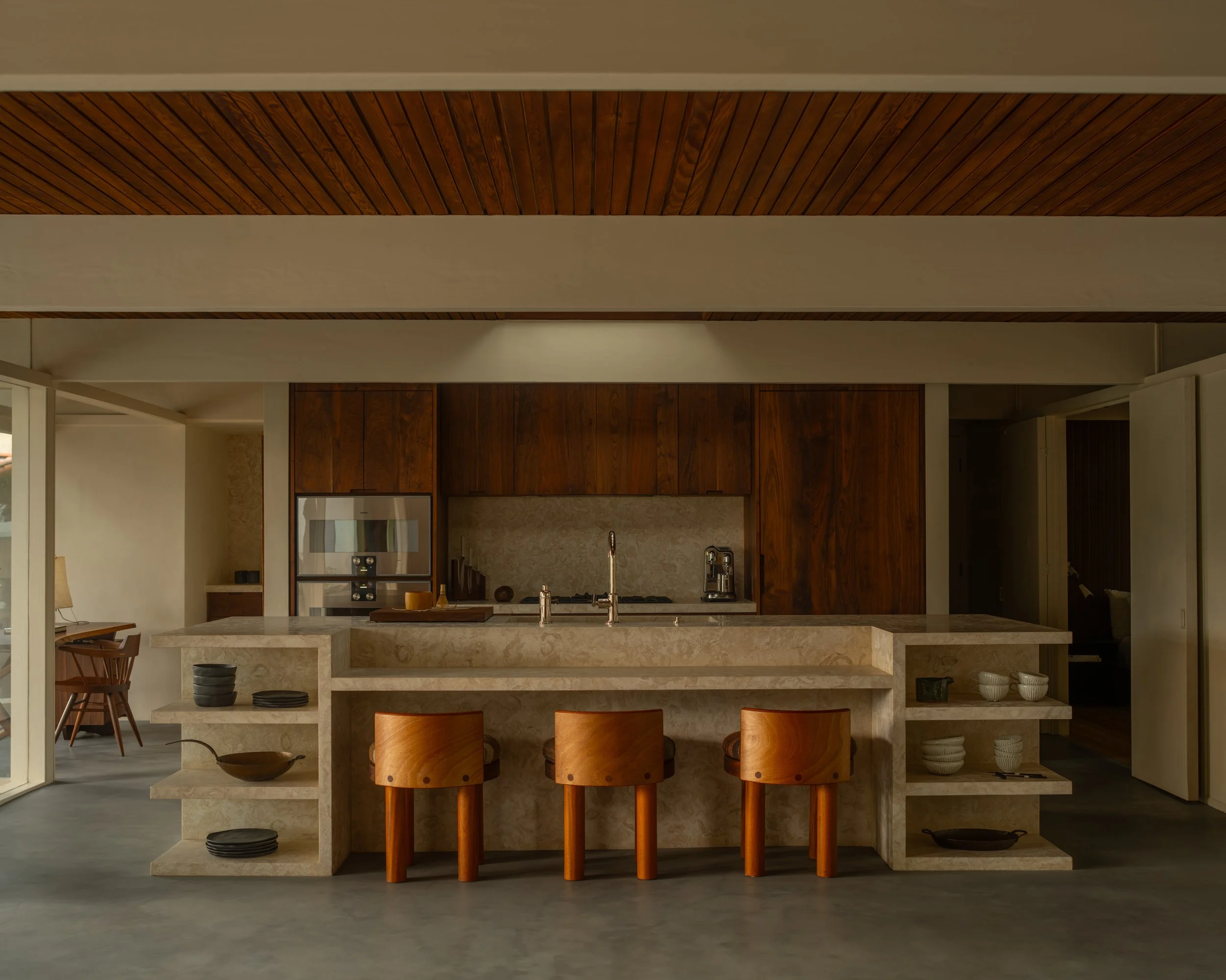
The result is a home that functions at a higher level without losing what made it special to begin with. The main living spaces feel more open and connected, but the original architecture is still present just more refined and easier to experience.
The kitchen now sits naturally within the flow of the home, the connection to the outdoors feels integrated rather than separate, and the overall layout supports how the house is actually used day to day.
What changed isn’t just how the home looks it’s how clearly it reads. The space feels calmer, more cohesive, and more aligned with its original intent.



restored
handover
coordinated
carefully brought forward
SOME MORE CASE STUDIES
-
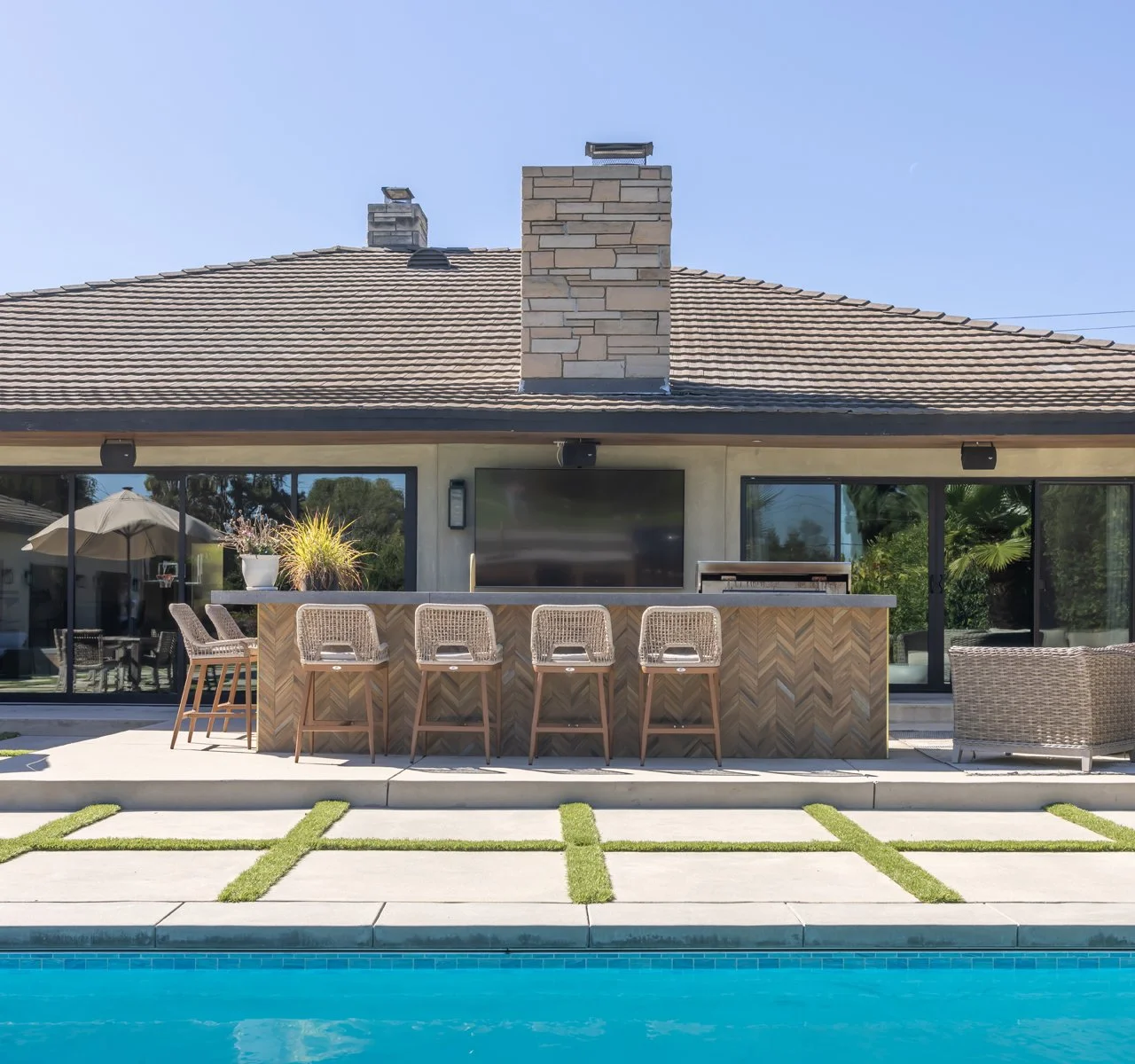
![Culver City home remodel with outdoor kitchen bar, poolside seating, and integrated ADU creating a seamless indoor-outdoor living space]()
CULVER CITY COMPLETE REMODEL + ADU
-
![Open-concept living space with large windows, modern finishes, and indoor-outdoor connection]()
HOLLYWOOD HILLS HOME REMODEL
-
![Westwood home remodel with second story addition and pool, rear exterior with wood deck, open sliding doors, outdoor dining area, and seamless indoor-outdoor living]()
WESTWOOD FAMILY REMODEL + SECOND STORY ADDITION + POOL
-
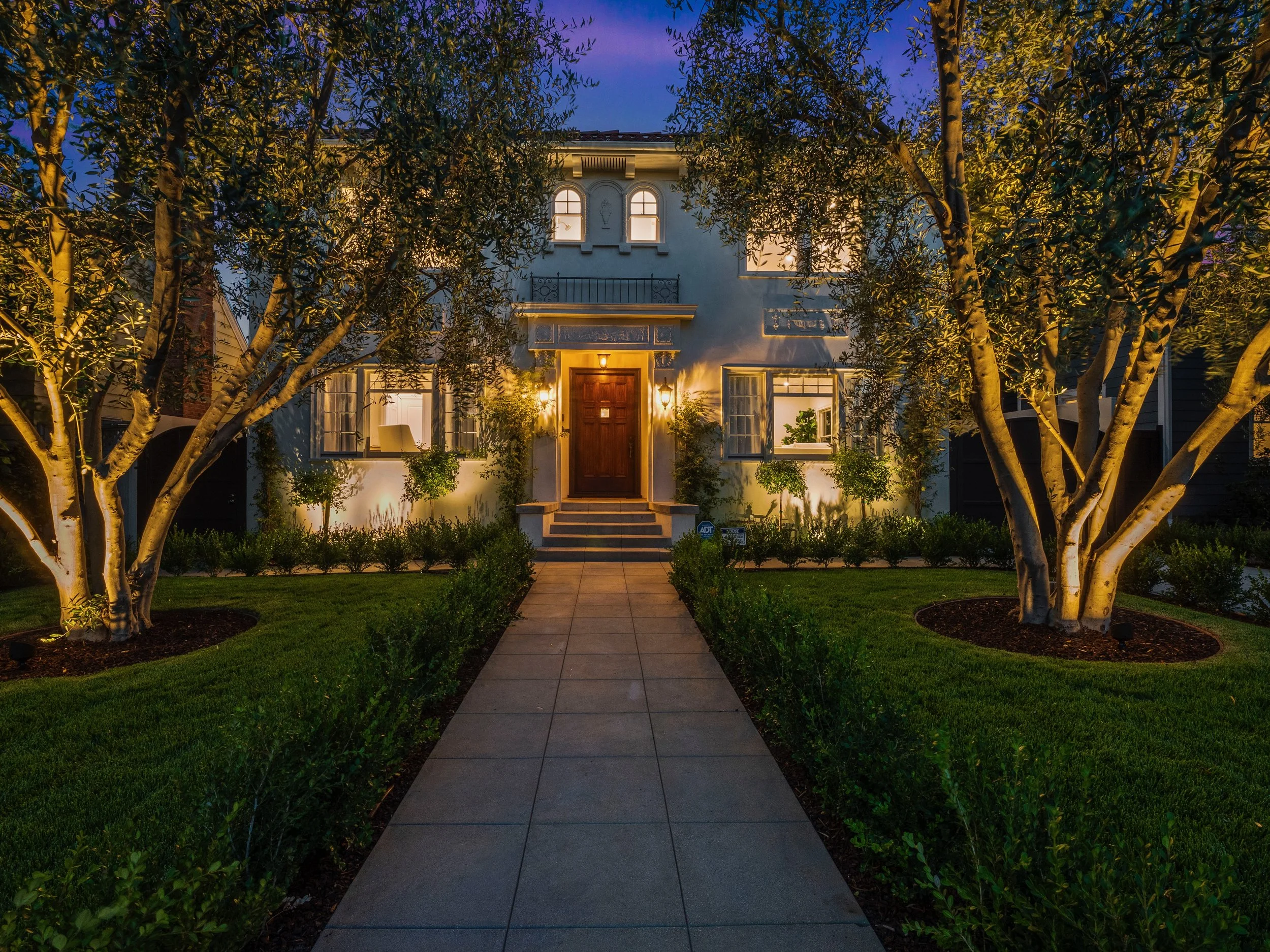
![Hancock Park historical home restoration exterior at dusk with restored façade, original architectural details, and landscaped entry walkway]()
HANCOCK PARK HISTORICAL RESTORATION + ADDITION
-
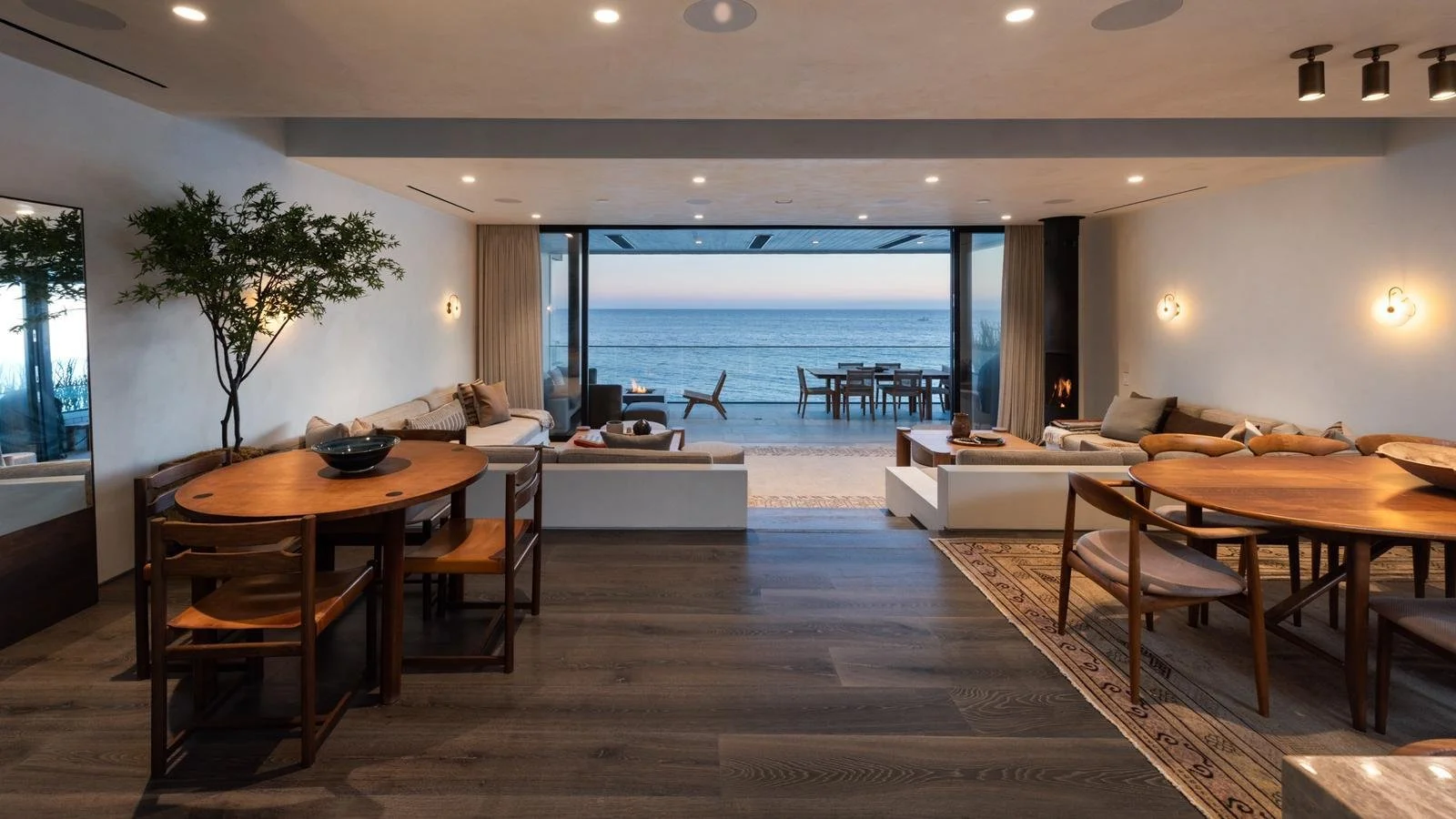
![Malibu beachfront condo remodel with open living space, seamless indoor-outdoor design, and panoramic ocean views]()
MALIBU BEACHFRONT CONDO REMODEL
-
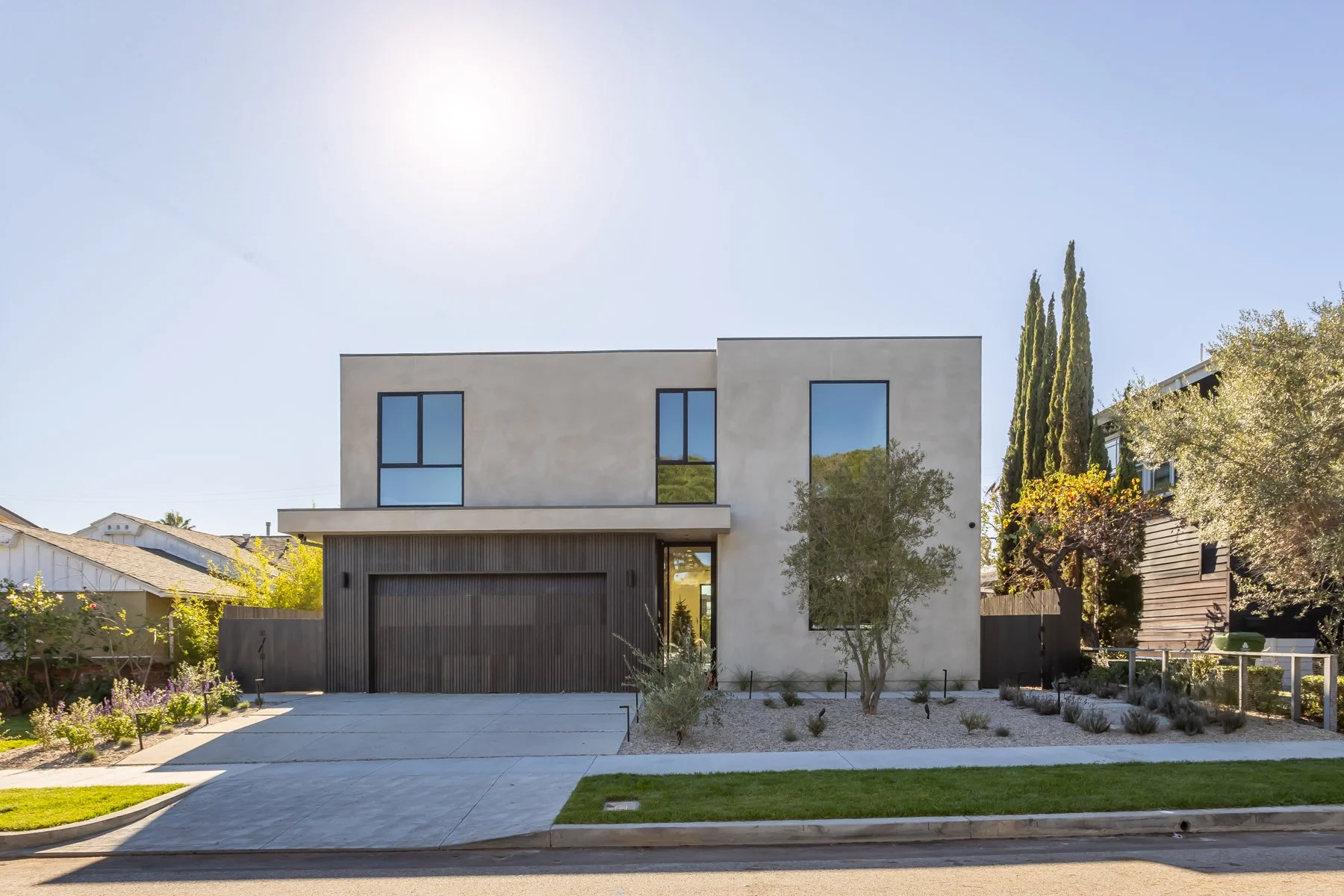
![Modern two-story custom home in Mar Vista with clean stucco facade, large windows, and integrated garage]()
MAR VISTA CUSTOM HOME BUILD
-
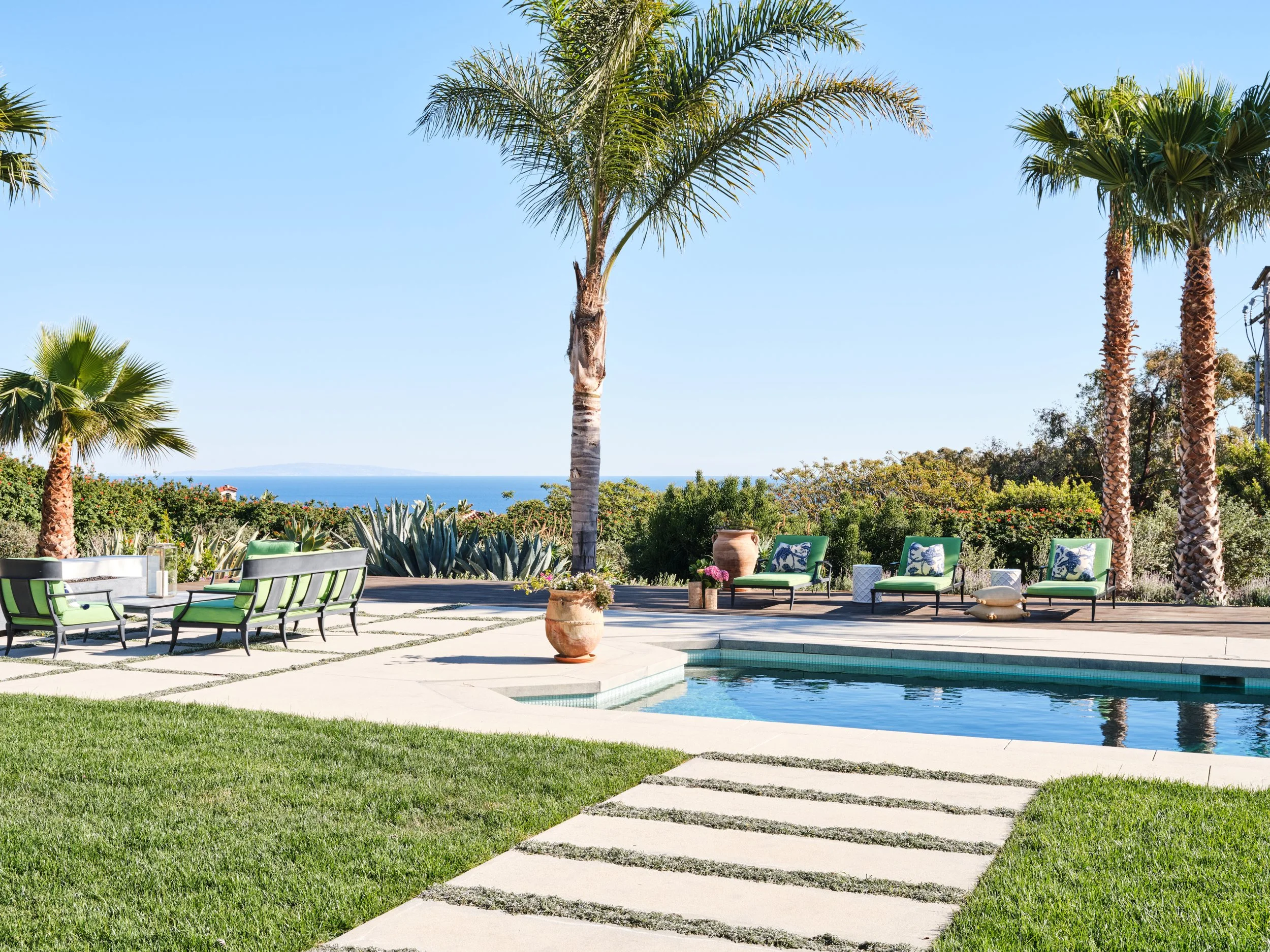
![Outdoor living space with pool, lounge seating, and ocean views in landscaped Malibu backyard]()
MALIBU SPANISH HOME REMODEL
-
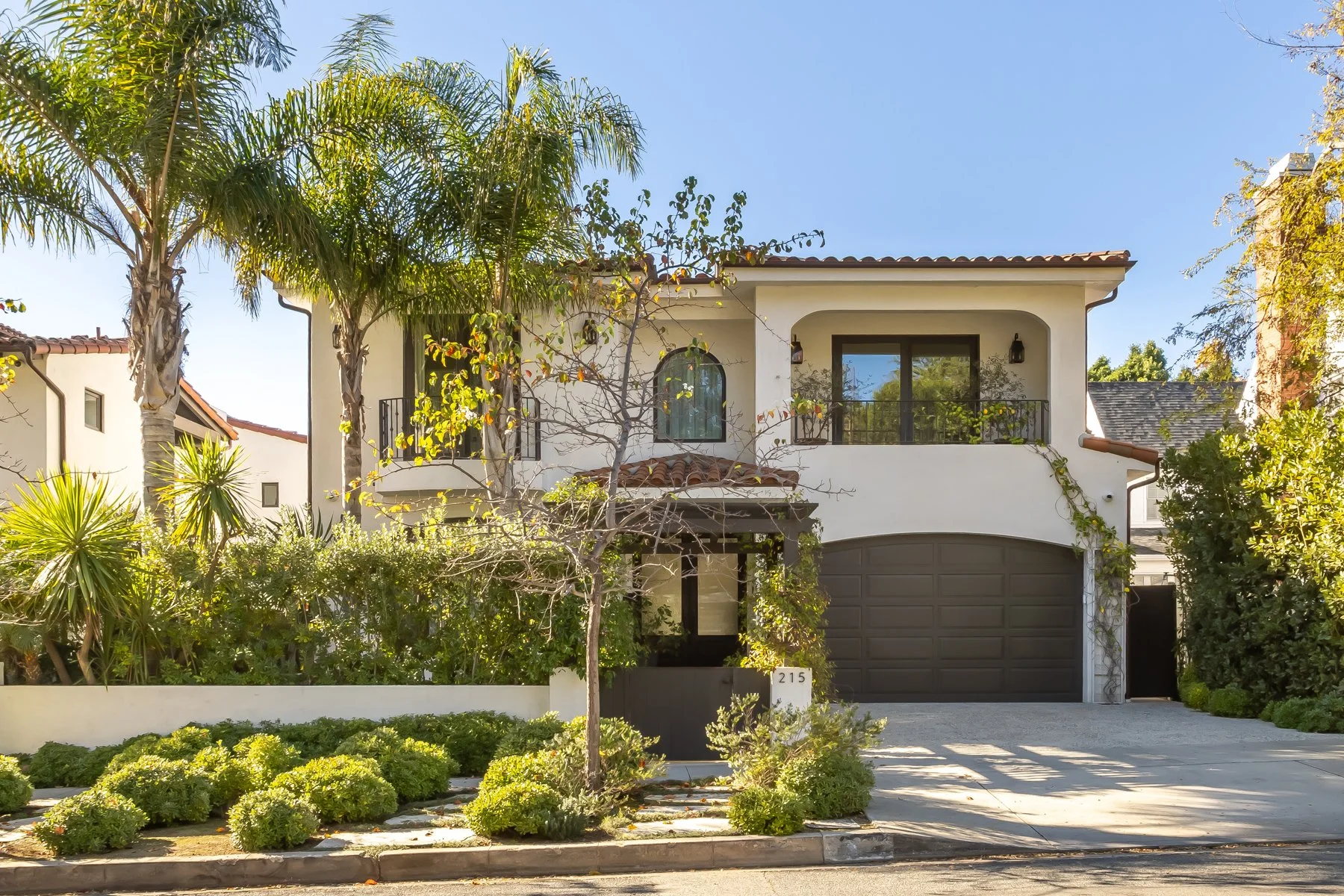
![Brentwood custom home with Spanish-style architecture, white stucco exterior, clay tile roof, arched openings, balcony, and landscaped front yard in Los Angeles]()
BRENTWOOD CUSTOM HOME BUILD


Explore Further
Related services and resources.
SERVICE
Full Home Remodels
See how Heart approaches complete home renovations, from early assessment through final handover.
LOCATION
Hollywood Hills General Contractor
Learn more about how we approach hillside homes, local complexity, and remodeling in Hollywood Hills.
GUIDE
Remodel vs Rebuild in Los Angeles
A helpful guide for homeowners deciding whether to renovate an existing structure or start from the ground up.
Ready to talk about your home?
We work across Hollywood Hills, Brentwood, Pacific Palisades, West Hollywood, and greater Los Angeles.