
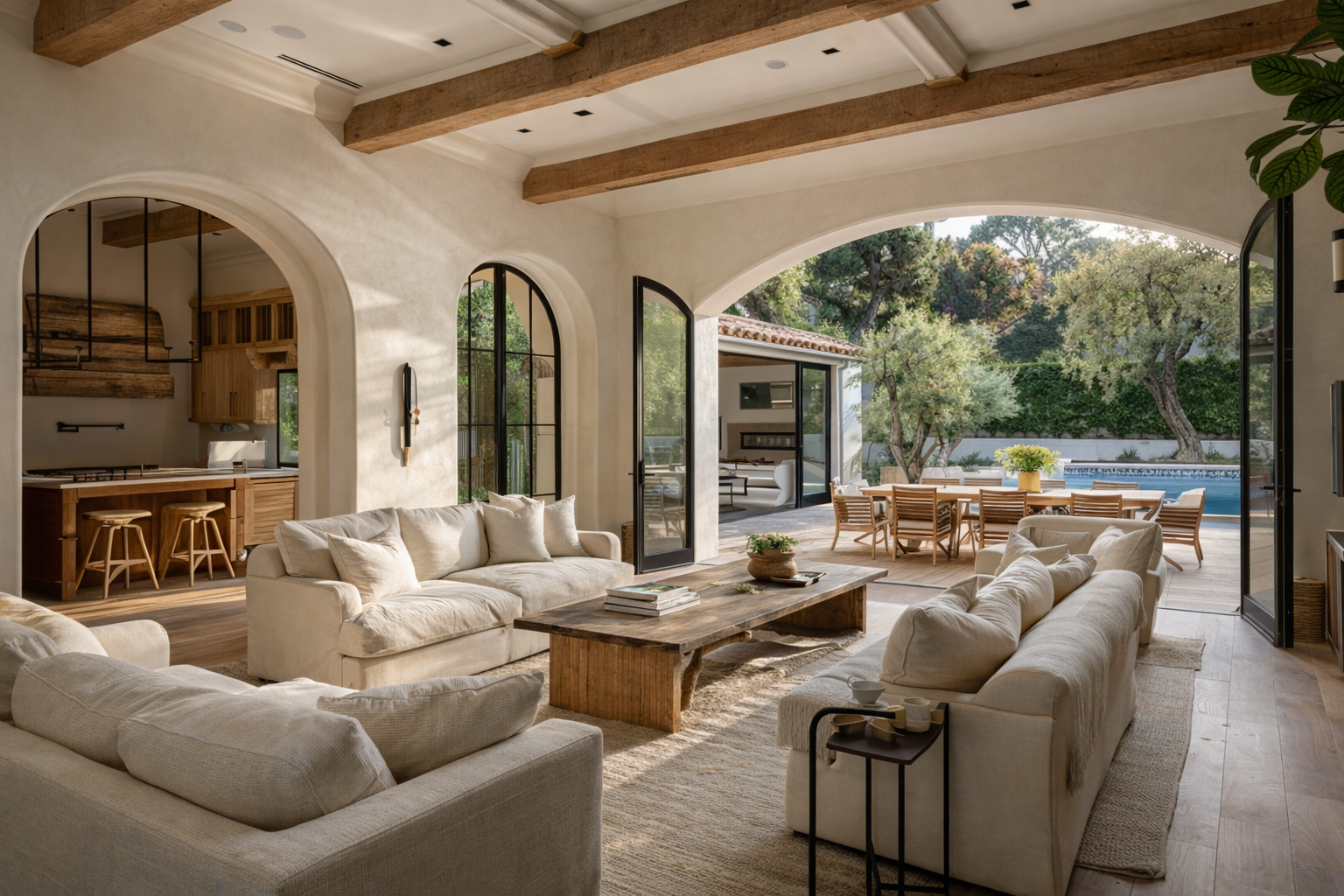
CALABASAS CUSTOM HOME BUILDER & GENERAL CONTRACTOR
ESTATE-LEVEL HOMES IN CALABASAS, BUILT WITH STRUCTURE AND INTENTION.
We Do Not Approach Calabasas as Another Los Angeles Job
Most contractors who build in Calabasas treat the HOA as a box to check. They submit architectural drawings to the review committee after the permit is already in progress, discover the HOA has required modifications, and spend the next two months reconciling conflicting approvals.
That is not how we work here.
Calabasas is not a plug-and-play permit environment. It is an HOA-governed, estate-driven market where architectural review committee approval often must precede or run in parallel with county permit submission. Each community has its own CC&Rs, design standards, submission requirements, and construction protocols that govern everything from driveway materials to delivery access to staging and fencing.
Getting both tracks right simultaneously HOA architectural review and Los Angeles County Building and Safety is what determines whether a Calabasas project moves or stalls. Most contractors don’t manage both tracks with equal discipline. We do.
We have built and remodeled throughout The Oaks, Mountain View Estates, Vista Pointe, Calabasas Park Estates, The Ridge, and the non-gated neighborhoods along Mulholland and Las Virgenes. We coordinate with HOA architectural review committees as a standard part of our pre-construction process not as an afterthought.
That is what building in Calabasas actually requires.
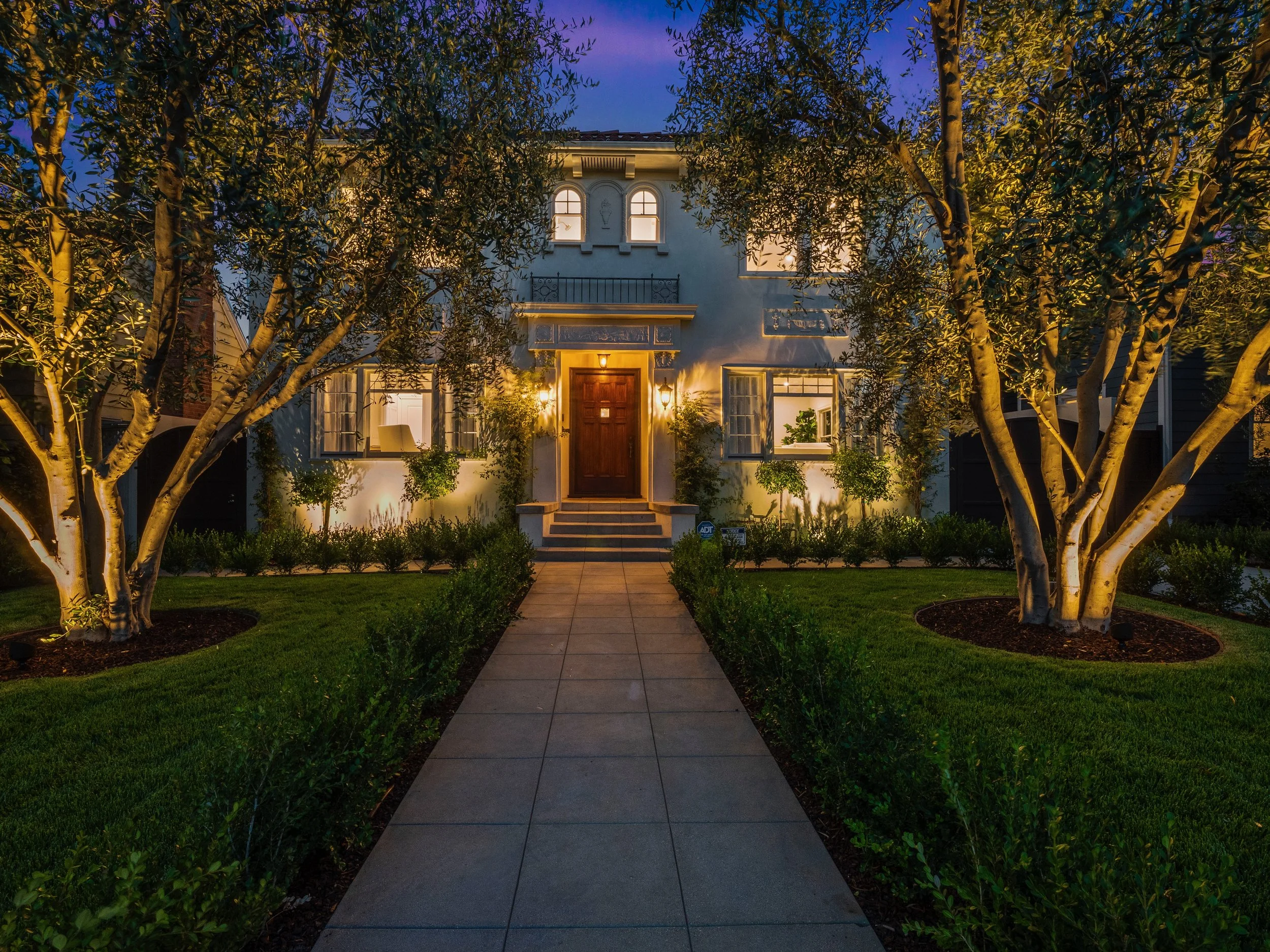
What Building in Calabasas Actually Requires
Calabasas projects move through Los Angeles County Building and Safety for permitting. But in much of Calabasas, county permitting is only one of the approval tracks that govern the project.
The HOA architectural review track is the one most homeowners underestimate.
In communities like The Oaks, the architectural review committee commonly requires a complete submission package before any exterior work is approved: a site plan with property lines and setback lines, floor plans, elevations of all sides, exterior material and finish specifications, landscape plans, and often drainage information showing site elevations and stormwater routing. The HOA does not approve structural adequacy that is the county’s role but it does approve conformity with community standards, and it can require material or design changes that ripple back through the county permit set.
Typical Calabasas project requirements include:
HOA architectural review committee submission and approval (community-specific)
Los Angeles County Building and Safety permitting running parallel to HOA review
Geotechnical soils reports and grading plans for hillside parcels
Retaining wall engineering and drainage design where grade changes apply
WUI fire-resistance assembly compliance where required
Title 24 energy compliance documentation
Structural engineering coordination before schematic design is finalized
Construction staging and access plans that comply with HOA site protocols
Pool and spa coordination as part of the unified permit and construction sequence
View easement and neighbor impact considerations on canyon and ridgeline properties
Projects that arrive at the HOA committee with incomplete packages receive correction requests that delay county submission by weeks. Projects that file with the county before HOA alignment is secured risk redesign after permitting begins. The sequence matters — and managing both tracks simultaneously requires experience with how each community’s committee operates.
Understanding Calabasas Neighborhood by Neighborhood
Calabasas is not uniform. The construction reality in The Oaks is different from Mountain View Estates, which is different from Vista Pointe, which is different from the non-gated neighborhoods along Mulholland Highway. Treating them as interchangeable is where projects go wrong.
The Oaks
The Oaks is the most architecturally demanding community in Calabasas and the most scrutinized. The HOA maintains strict design standards governing exterior finishes, color palettes, roofline profiles, hardscape materials, and landscape character.
The Estates at The Oaks a gated community within the gated community carries the highest finish expectations in Calabasas. Scope often includes indoor-outdoor integration, resort-style pool environments, covered patios, outdoor kitchens, and guest structures that must be coordinated as one unified site plan.
Remodeling or expanding in The Oaks begins with the HOA architectural review committee, not with a permit. Design decisions that conflict with community standards must be resolved during design development not after plan check submission if you want the project to stay on schedule.
Mountain View Estates
Mountain View Estates includes homes built primarily in the 1990s and early 2000s on generous lots with more accessible topography than canyon-adjacent communities.
Most homes are now candidates for full interior reconfiguration, kitchen and great room expansion, and exterior refresh toward contemporary Mediterranean or transitional profiles. HOA architectural review governs exterior changes roofing, stucco systems, window packages, driveway surfaces and material selection must align with community standards.
Lot conditions here can be favorable for guest casitas or ADU feasibility depending on CC&Rs, setbacks, and utility routing.
Vista Pointe
Vista Pointe sits on elevated terrain, and the hillside conditions here are real not incidental. Grade changes, retaining walls, and drainage routing are core project variables, not secondary details.
Geotechnical soils reports are standard. Retaining wall design must be engineered and reflected in the county permit set. View corridors are a defining feature, and roofline or massing changes require careful evaluation before design is committed.
HOA review here is particularly attentive to site plan accuracy: lot corner elevations relative to finished floor level, drainage routing, and landscape/hardscape specifications must be precise. Incomplete submissions receive correction requests that reset the clock.
Calabasas Park Estates
Calabasas Park Estates is an established luxury community with lot sizes that often support meaningful outdoor living environments, pool and spa construction, and guest structures without the compression of smaller-lot communities.
Most homes are candidates for comprehensive modernization: kitchen and great room reconfiguration, primary suite expansion, window and door replacement, and full exterior refresh. Lot conditions tend to be more forgiving than Vista Pointe, but HOA architectural review still governs exterior scope and must be managed in parallel with county permitting.
The Ridge
The Ridge is a smaller guard-gated community of approximately 50 estate homes. That scale changes the construction reality: there is less anonymity, streetscape decisions receive closer attention, and construction staging and neighbor coordination matter more.
Finish expectations are consistently high, and HOA protocols for access, staging, and site cleanliness tend to be managed more tightly in a smaller community.
Hidden Hills (Adjacent Market, Same Reality)
Hidden Hills borders Calabasas and shares many of the same architects, engineers, and construction expectations. It also has some of the clearest “rulebook” constraints in the area, and those constraints shape how projects must be sequenced.
Examples of Architectural Controls Committee requirements that commonly apply include:
House placement approval and staking before trees can be cut or grading begins
Construction vehicles entering and parking only on the approved building plot
Debris removal maintained continuously throughout construction
Driveway materials restricted to brick, stone, or natural concrete (asphalt and gravel prohibited)
These are not formalities. They affect access, staging, scheduling, and scope — and they must be planned for early.
Non-Gated Calabasas: Mulholland, Las Virgenes, and Calabasas Road Corridors
Not all of Calabasas is gated. Properties along Mulholland Highway, Las Virgenes Road, and parts of Calabasas Road fall outside HOA jurisdiction and move through Los Angeles County without the parallel architectural review track.
But the absence of HOA review does not simplify the project it shifts complexity to county-level geotechnical, grading, drainage, and WUI requirements. Many of these properties also carry mature oak tree preservation constraints. County permits for removal or significant trimming of heritage oaks, and root zone protection planning during staging, are real variables that can trigger corrections if not addressed early.
The HOA Architectural Review Process: What Contractors Get Wrong
The most common mistake contractors make in Calabasas is treating HOA architectural review as a formality that runs after design is complete.
It is not a formality. It is a design constraint that must be incorporated from the beginning.
In one Calabasas project, a homeowner in The Oaks had advanced architectural drawings through schematic design before the HOA committee had reviewed the proposed exterior material palette. The committee required modifications to the roofing material and stucco finish color changes that were straightforward on their own, but required revisions to the county permit set that had already been submitted. The project absorbed a two-month delay while the permit set was revised, resubmitted, and re-reviewed.
That delay was entirely preventable. The HOA committee’s standards were available before design began. Early coordination would have produced a permit set that cleared both tracks simultaneously.
That is how we manage it. HOA review requirements are incorporated into the design brief before schematic design begins. Committee submission is prepared in parallel with county permit documentation. Both tracks advance together.
Services We Deliver Across Calabasas
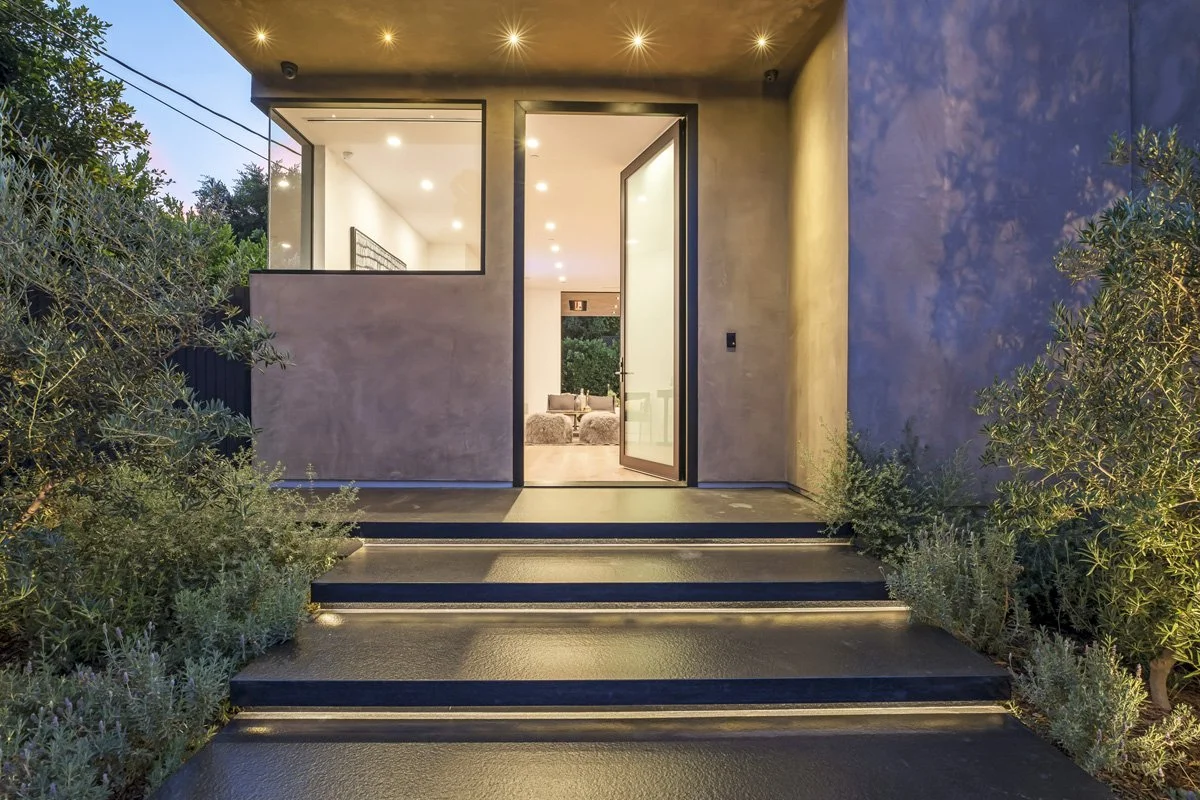
Custom Homes in Calabasas
Ground-up construction in Calabasas begins with dual-track feasibility: HOA standards and county requirements evaluated simultaneously before design begins.
For gated community properties, the HOA submission must be prepared with the same precision as the county permit set: site plan, elevations, exterior material specifications, landscape plans, and often drainage documentation. Incomplete submissions reset the clock.
For hillside and canyon-adjacent properties, geotechnical soils reports and grading feasibility must precede foundation design. Retaining walls, drainage routing, and slope stability are required variables that must be reflected in the drawings before plan check submission.
Our Calabasas pre-construction framework includes:
HOA CC&R review and design standard analysis
Zoning envelope and lot coverage verification
Geotechnical coordination for hillside and canyon parcels
Structural engineering alignment before schematic design advances
WUI compliance planning where required
Title 24 energy documentation
HOA committee submission preparation
County permit set coordination running parallel to HOA review
Budget calibration before design commitment
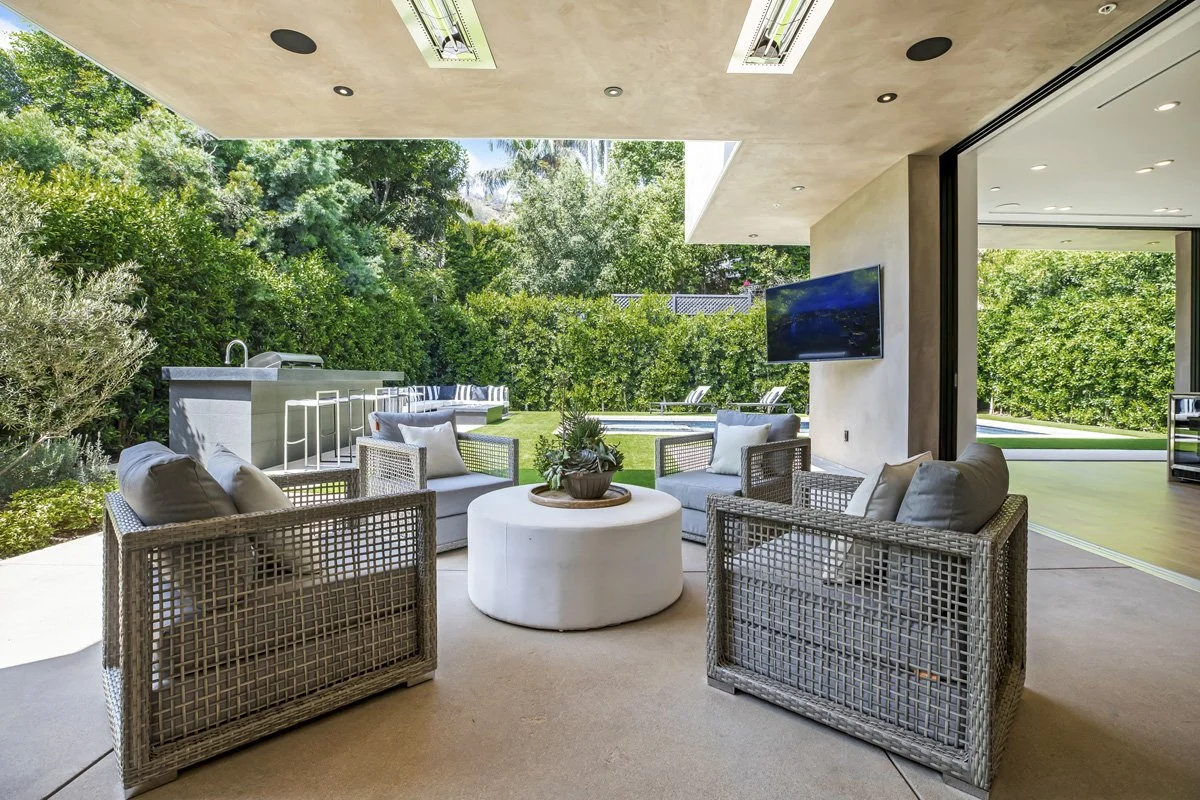
Full Home Remodeling in Calabasas
Whole-home remodelsin gated communities require HOA review for exterior modifications — roofing, windows, doors, exterior finishes, hardscape, and any structural addition that affects the building envelope.
Many Calabasas homes were built between the late 1980s and early 2000s. That era brings common modernization scope: HVAC systems designed for the original floor plan, electrical panels sized for earlier load demands, plumbing systems now decades old, and structural framing reflecting its time.
Whole-home remodels often involve:
Full interior reconfiguration with engineered beam integration
Kitchen and great room expansion
Window and door replacement with current energy compliance
HVAC redesign and zoning improvements
Electrical panel upgrades and smart home integration
Primary suite and bath reconfiguration
Exterior refresh coordinated through HOA review
Outdoor living integration planned as part of one unified scope
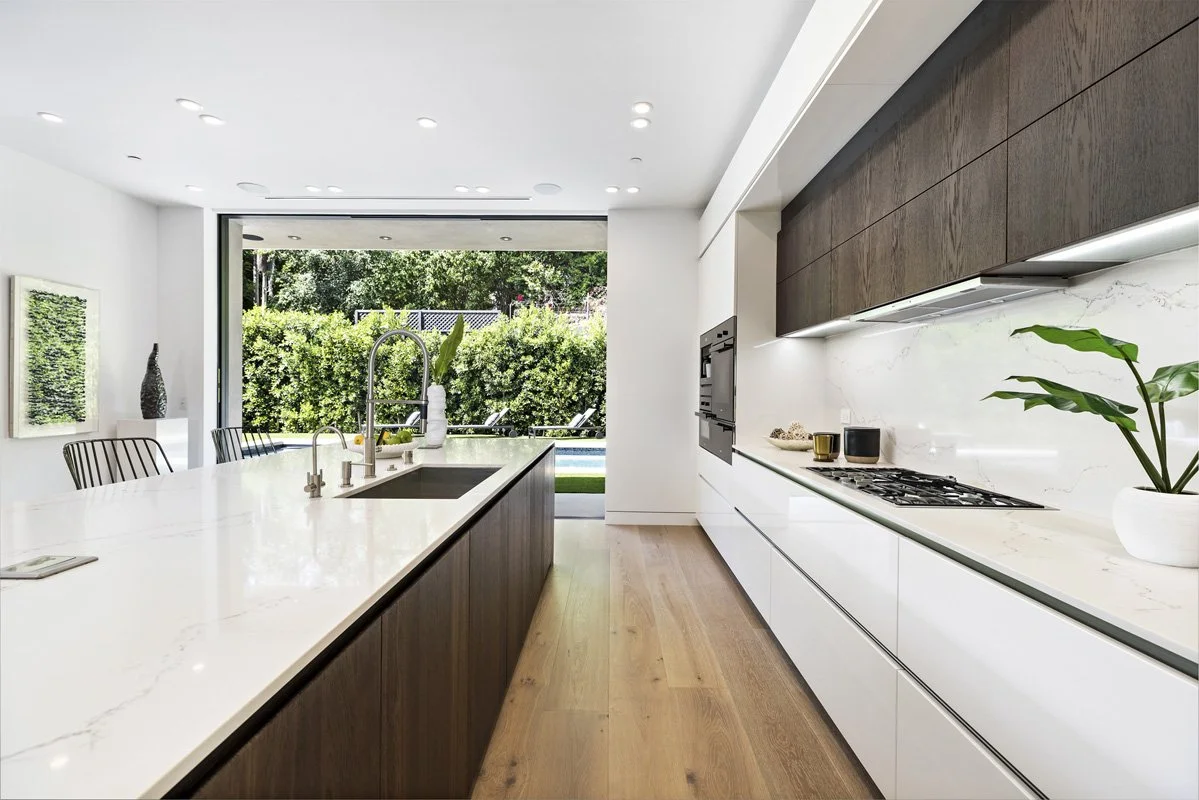
Kitchen Remodeling in Calabasas
In Calabasas, kitchens are rarely just kitchens.
Many estate homes were built with kitchen-family room configurations that feel compartmentalized today. Expanding into adjacent spaces often requires structural wall removal and engineered beam integration — work that must be coordinated with the structural engineer before cabinet layouts are finalized.
Stone fabrication requires field measurement after structural modifications are complete. Ventilation must comply with current standards. Appliance integration for high-end ranges and refrigeration columns requires utility rough-in coordination and correct sequencing.
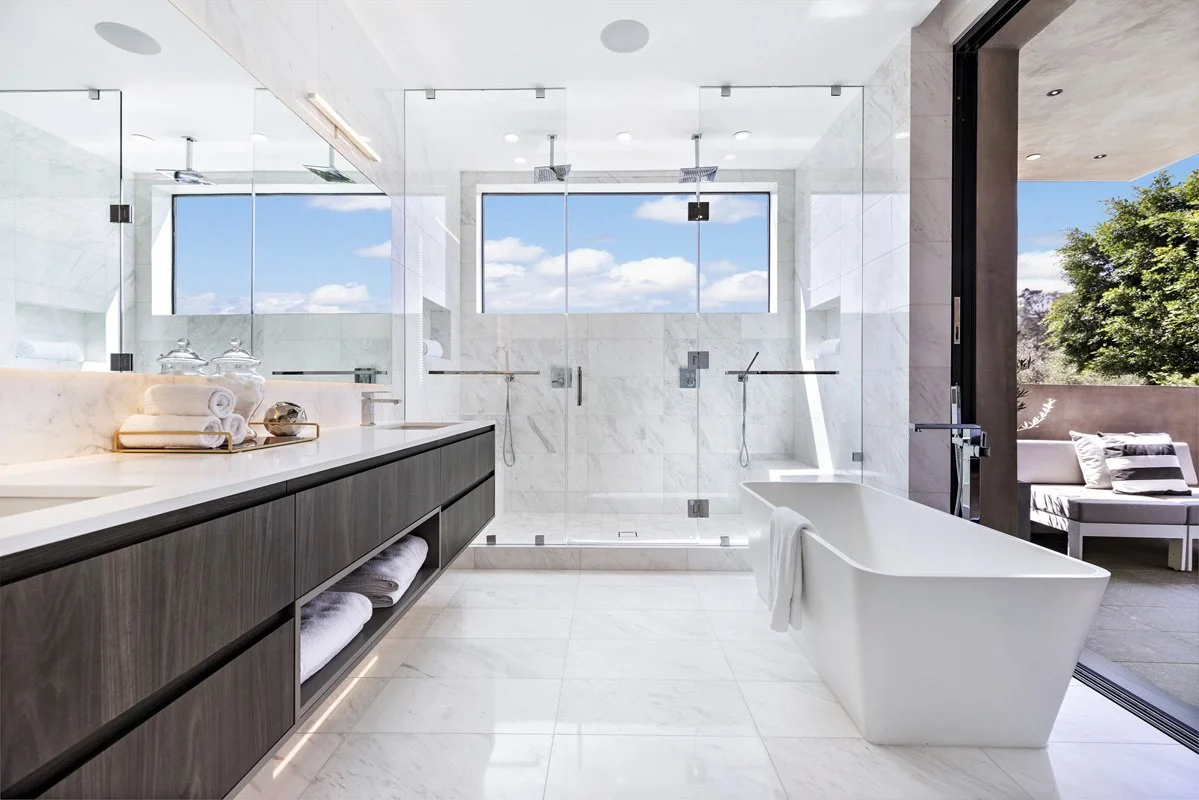
Primary Bathrooms in Calabasas
Primary bathrooms are among the most involved single-room projects we manage.
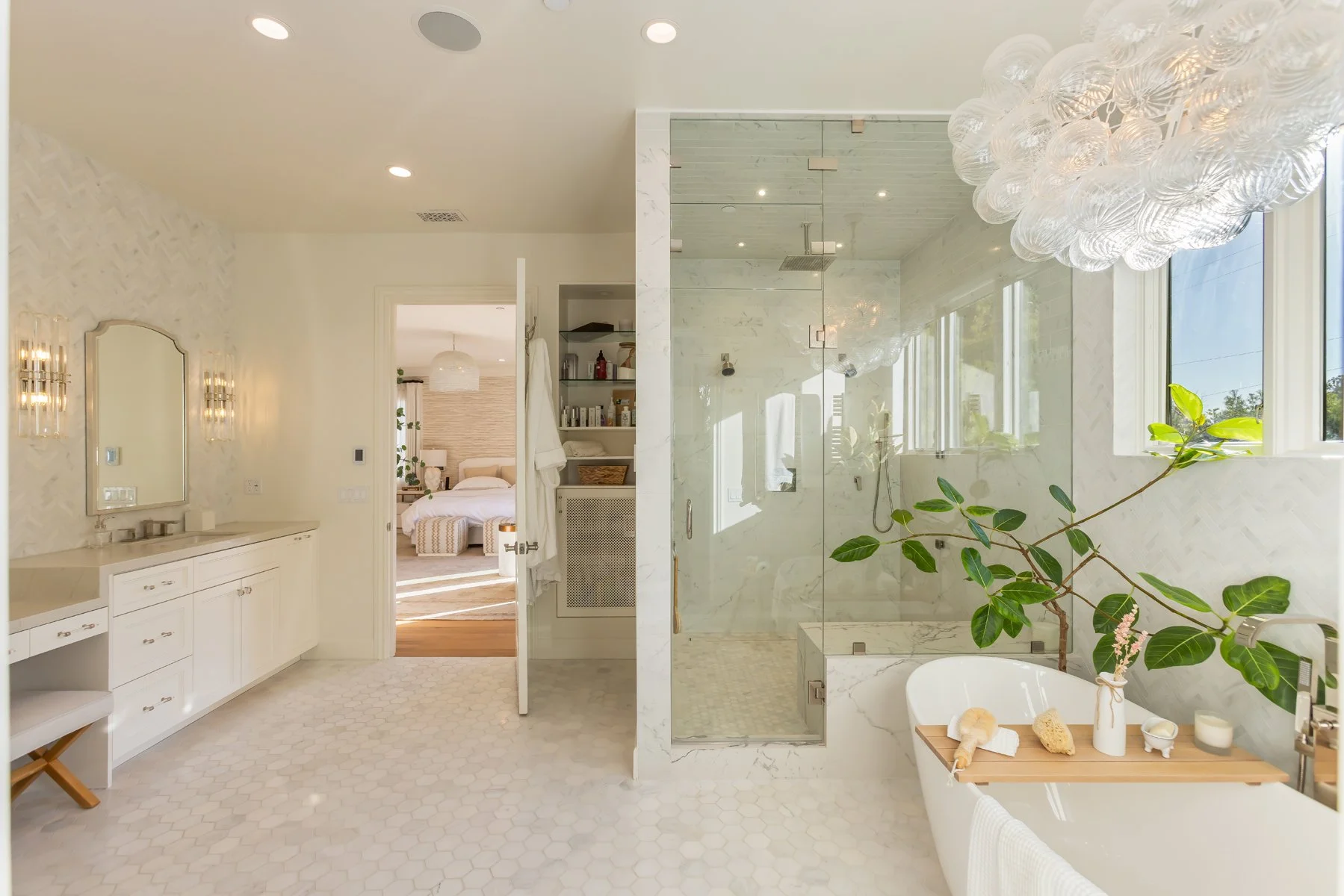
Plumbing reconfiguration is common. Steam showers, radiant heated floors, frameless glass, floating vanities, and lighting integration require disciplined rough-in sequencing before tile and finishes begin. Waterproofing assemblies must be specified and installed correctly — a failure point that becomes expensive to correct after finishes are in place.
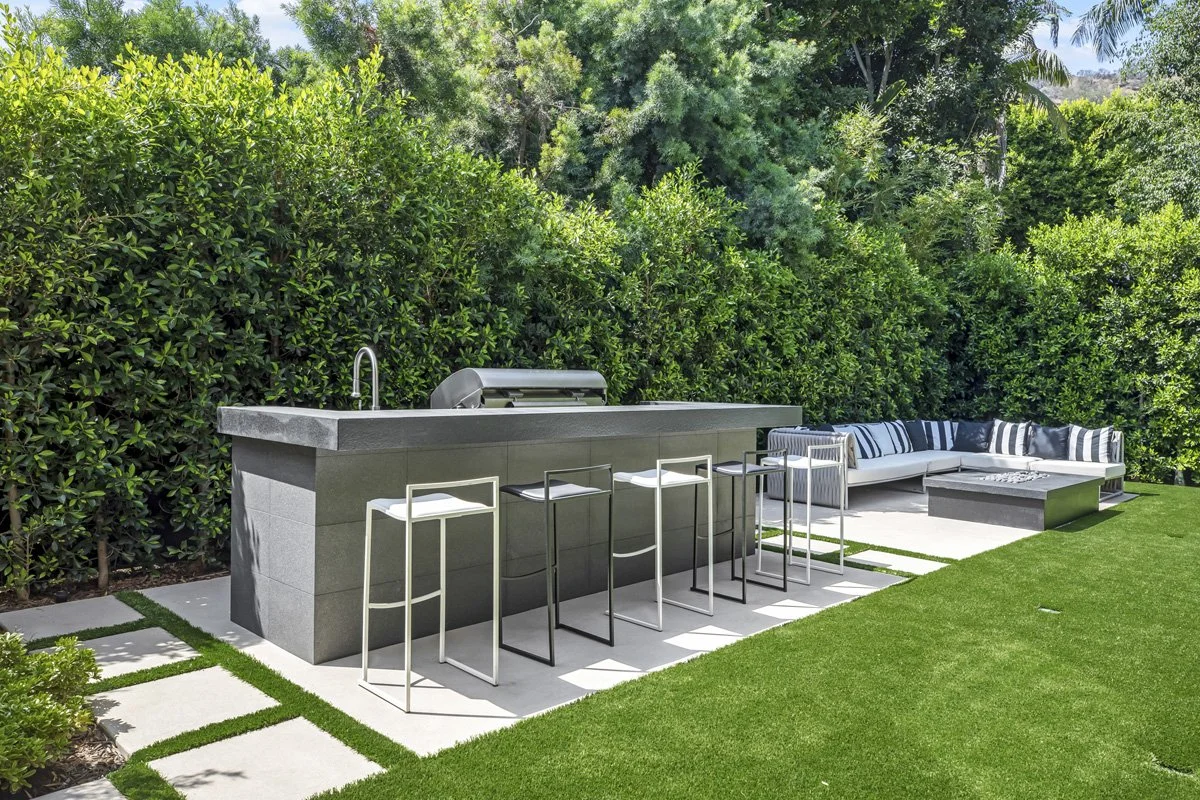
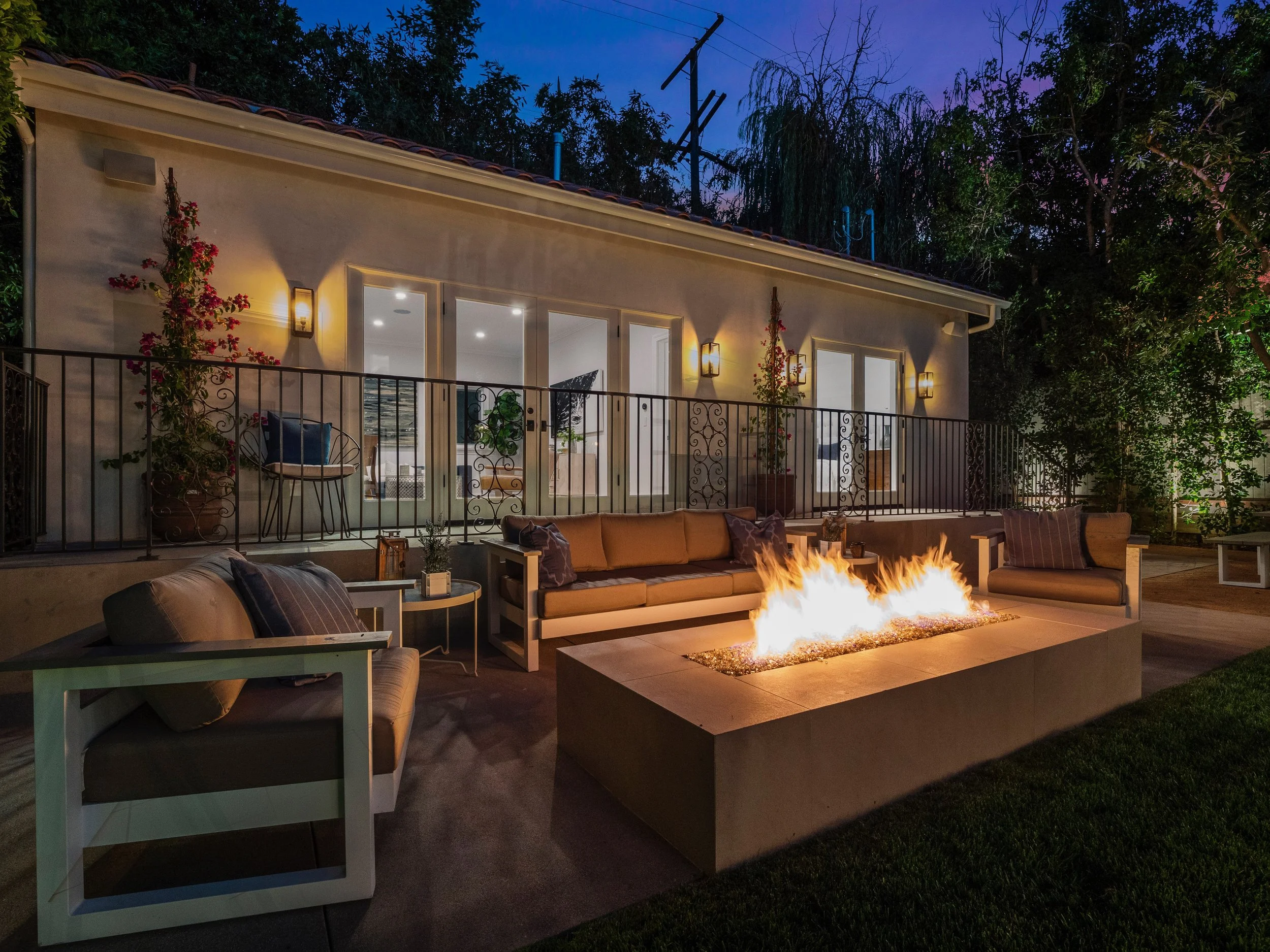
Outdoor Living in Calabasas
In Calabasas, outdoor space is functional square footage.
Pools, spas, covered patios, outdoor kitchens, fire features, and guest structures must be coordinated as one system — permitting, engineering, utilities, lighting, drainage, and scheduling.
We manage outdoor living as a unified scope: one permit strategy, one construction sequence, one point of accountability. HOA review governs site plans, structure heights, hardscape materials, and landscape character — and must be managed in parallel with county approvals.
ADUs in Calabasas
ADUs are viable on many Calabasas parcels, but feasibility varies significantly by community.
Some HOAs restrict or limit detached accessory structures. Others allow guest casitas or ADUs with strict placement, material, and site plan requirements. Hillside parcels may require slope, drainage, and retaining feasibility review before design is committed.
We evaluate:
Lot size and allowable coverage under county zoning
HOA CC&R restrictions on accessory structures
Setback and fire separation compliance
Utility capacity and routing
Construction staging feasibility
HOA submission requirements for site plan and structure design
ADUs in Calabasas are long-term property strategy — and one of the most HOA-sensitive project types in this market.
Working with Architects and Designers
Many Calabasas projects begin with an architect or interior designer already engaged.
In gated communities, HOA alignment must happen before schematic design is finalized — not after the permit set is submitted. Structural scope must align with geotechnical findings early. Otherwise, redesign costs arrive late and expensive.
We provide:
Early HOA CC&R and design standard review
Structural feasibility input during design development
Geotechnical coordination for hillside and canyon properties
Budget calibration before design commitment
HOA committee submission preparation and coordination
County permit set coordination running parallel to HOA review
WUI compliance planning where required
Architectural ambition without HOA alignment leads to delay. We align both from the first conversation.
How We Operate
In Calabasas, structure is not optional.
Every project begins with feasibility — HOA design standard review, structural evaluation, zoning validation, and where applicable, geotechnical assessment — before design advances. Budget alignment happens before architectural commitment. HOA committee submission and county permit coordination happen in parallel, not in sequence.
In Calabasas, that often starts with choosing the right path for the property — whether to remodel within HOA constraints, rebuild, or approach it as new construction from the beginning.
→ See how the remodel vs rebuild decision actually plays out
When two approval tracks are running simultaneously and either one can reset the other, preparation is what keeps a project on schedule.
We call this Build with Intention. Read more about our approach
RECENT PROJECTS
-
![Freestanding soaking tub beneath a sculptural glass chandelier in a Calabasas luxury bathroom remodel, featuring herringbone tile walls, marble walk-in shower, and abundant natural light.]()
BRENTWOOD
-
![Bright Malibu living room with vaulted ceilings, leather seating, layered textiles, custom iron railings, and curated artwork, showcasing Heart Construction’s craftsmanship and coastal-inspired transitional design.]()
MALIBU
-
![Open-concept living room in a Hollywood Hills home remodel with folding glass walls, custom built-ins, soft neutral furnishings, and seamless indoor-outdoor flow overlooking canyon views, showcasing Heart Construction’s warm modern design.]()
HOLLYWOOD HILLS
-
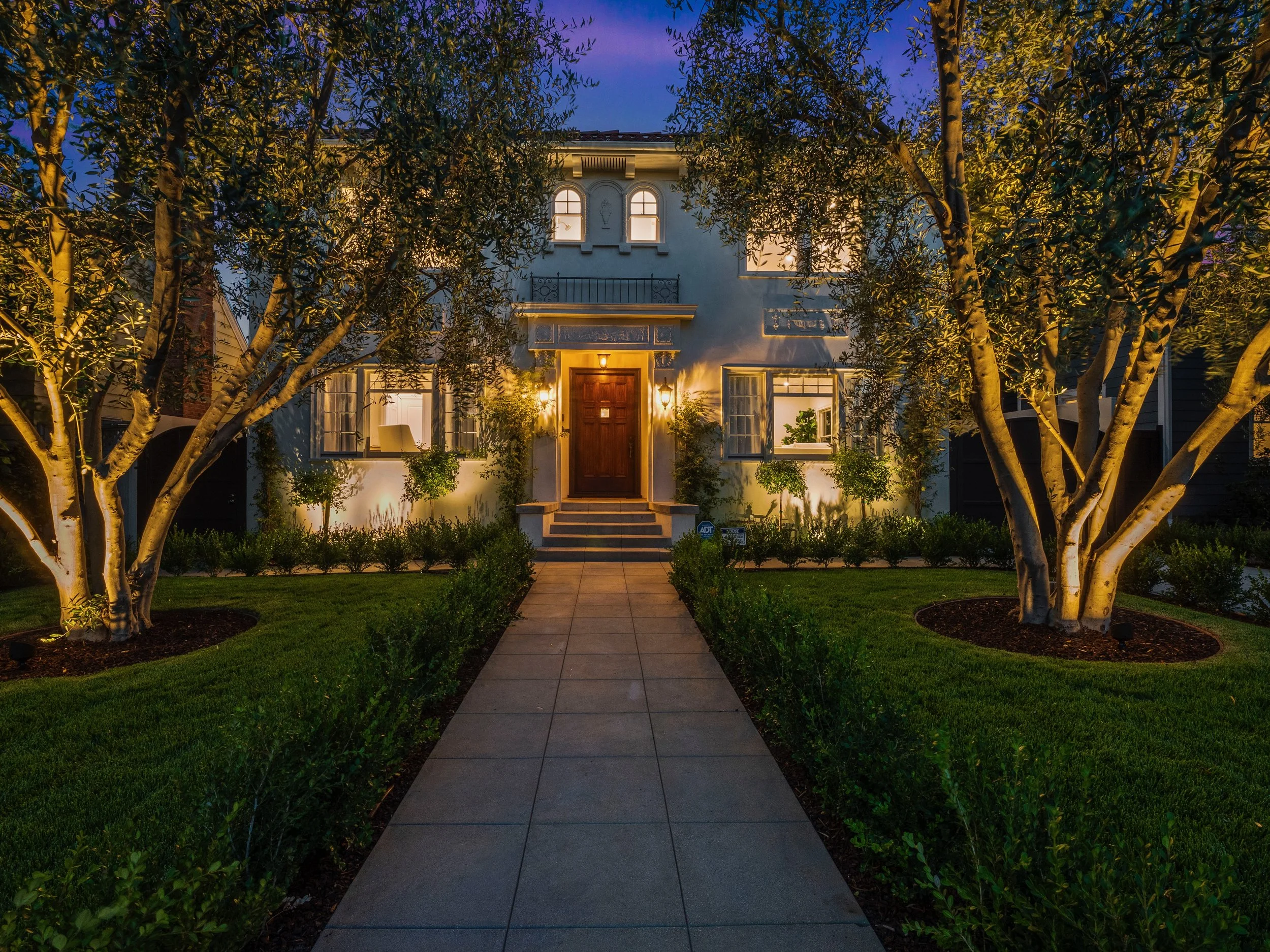
![Calabasas custom home exterior at dusk, featuring symmetrical Mediterranean architecture, warm landscape lighting, arched windows, and a manicured front walkway framed by mature trees.]()
HANCOCK PARK
-
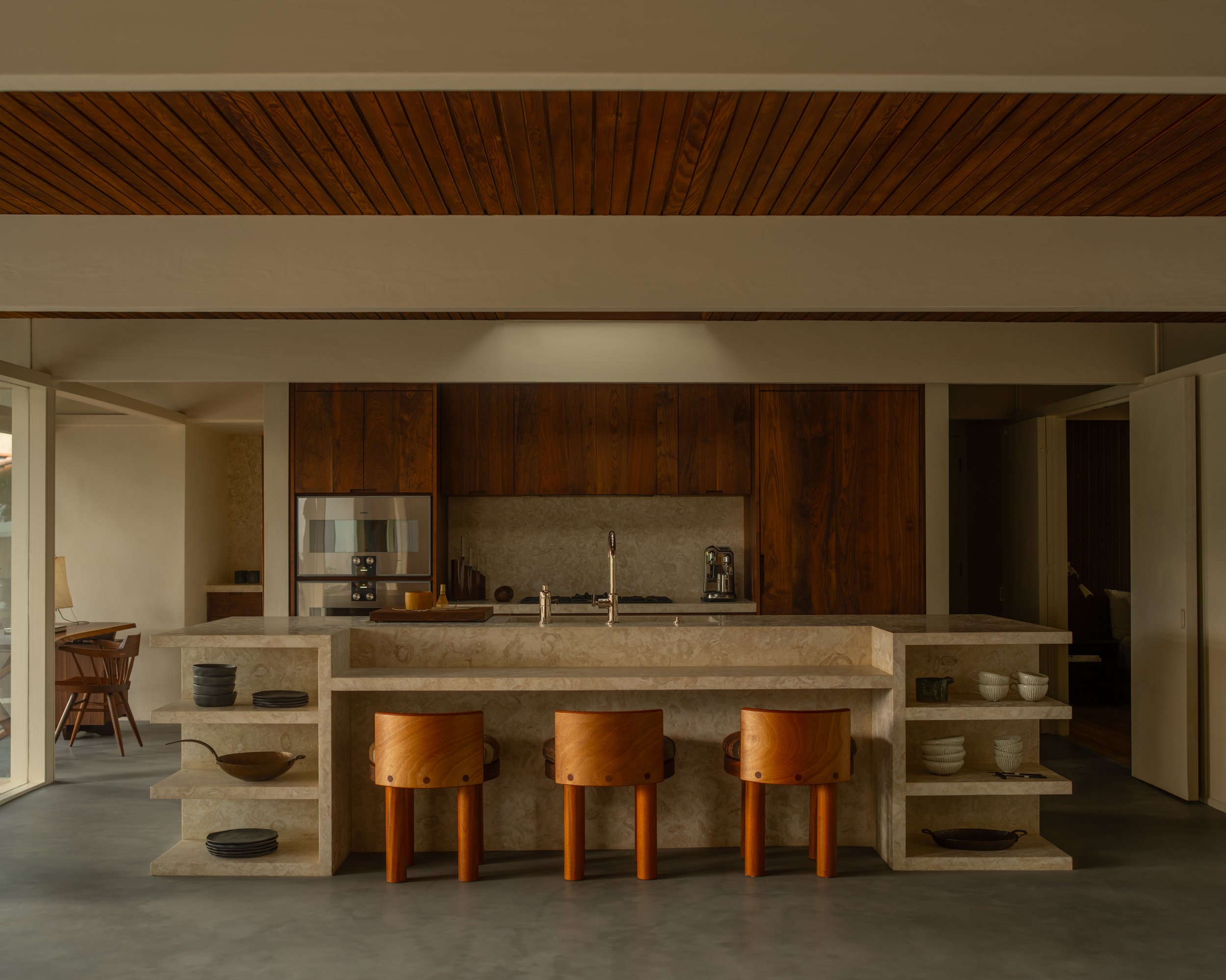
![Calabasas custom kitchen with integrated stone island, warm walnut cabinetry, wood-slat ceiling, and minimalist open shelving, designed for modern indoor-outdoor living.]()
LA CUESTA


FREQUENTLY ASKED QUESTIONS ABOUT BUILDING IN CALABASAS
-
Custom homes in Calabasas typically range from $650–$1,000+ per square foot, depending on lot conditions, hillside engineering requirements, HOA-mandated material specifications, architectural scope, and finish level. Estate-level builds in The Oaks and The Estates at the Oaks typically fall toward the higher end. Final budgeting requires feasibility review, geotechnical coordination, and HOA design standard analysis before plans are submitted.
-
Whole-home remodels typically range from $450–$750+ per square foot, depending on structural scope, system replacement requirements, HOA material specifications, and finish level. Projects involving significant reconfiguration, full system replacement, and high-spec finishes typically fall toward the higher end.
-
Kitchen remodels typically range from $100,000–$280,000+, depending on layout changes, structural scope, cabinetry level, appliance integration, and stone fabrication complexity.
-
Primary bathrooms generally range from $55,000–$150,000+, depending on layout changes, plumbing reconfiguration scope, steam system integration, radiant floor installation, and material selection.
-
In most gated communities, yes — and the HOA submission package must be complete. Most communities require a site plan, floor plans, elevations of all sides, exterior material specifications, a landscape plan, and often drainage documentation. We prepare HOA submissions and county permit sets simultaneously so both tracks advance together.
-
Timelines vary by community. Many committees meet monthly and respond within 30–60 days to a complete submission. Incomplete submissions receive correction requests that restart the timeline. The fastest path is a complete, compliant package the first time.
-
From permit approval through completion, most custom homes take 14–20 months, depending on size, hillside engineering complexity, HOA review timeline, and finish scope. Pre-construction including HOA review, geotechnical coordination, and county permit processing typically adds 4–8 months before construction begins.
-
Most major remodels require 6–12 months after permits are issued. Projects involving significant structural reconfiguration, full system replacement, and HOA review of exterior modifications may extend that timeline depending on committee scheduling and material lead times.
-
It depends on the community’s CC&Rs. Some HOAs restrict or limit detached accessory structures. CC&R review must happen before ADU design begins. Where ADUs are permitted, they typically require HOA architectural review and county permits, and must meet setbacks, fire separation, and utility requirements.
-
Yes. Many Calabasas projects begin with an architect already engaged. We provide structural feasibility input, HOA design standard review, geotechnical coordination, and budget calibration during design development — before the permit set is submitted — to align architectural intent with HOA requirements and county standards from the beginning.
For homeowners researching project budgets and planning timelines, explore our detailed guides on kitchen remodel costs and outdoor living investments in Los Angeles.
Explore All Neighborhoods We Serve
Heart Construction builds custom homes and major remodels across Los Angeles — from coastal and hillside communities to estate neighborhoods, valley properties, and urban infill areas.
See how neighborhood context shapes our approach across the city and check where we build
If you're planning a custom home or major remodel in Calabasas, early planning is critical.
The right decisions before construction begins determine how smooth the entire process becomes.
Schedule a consultation to discuss your project scope and timeline.