
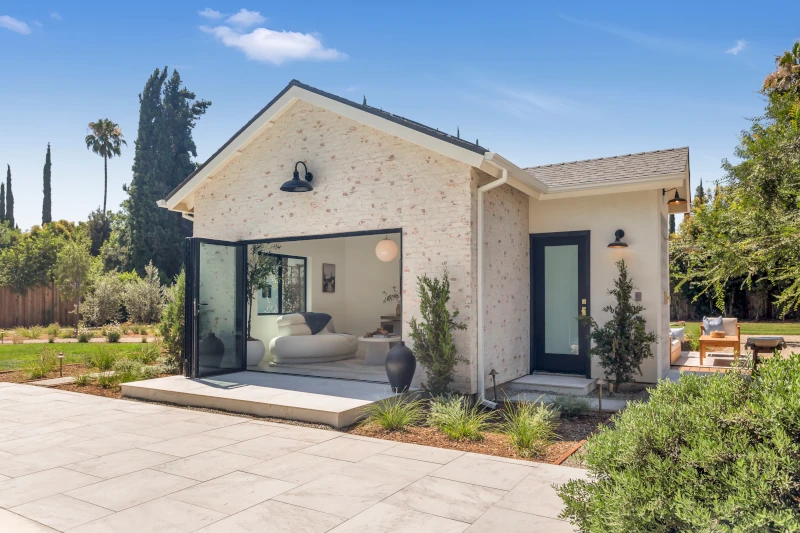
BEFORE YOU BUILD AN ADU
IN LOS ANGELES
LOS ANGELES · ADU DECISION GUIDEMake sure your property actually supports it — and that you understand what it will realistically take before design decisions commit the budget.
THE REAL QUESTION
Before you build an ADU in Los Angeles —
before cost, before design, before anything
Most homeowners come to us with a budget in mind and a rough idea of what they want. A detached unit for rental income. A garage conversion for a family member. A second structure to increase property value. Building an ADU in Los Angeles feels like a clear next step — until the property itself says otherwise.
Most ADUs in Los Angeles fall between $150,000 and $550,000+ — but the range isn't the real issue.
But the question they're actually asking — and often don't know how to ask — is whether their specific property supports that vision. Whether the lot, the utilities, the zoning, and the site conditions align with what they're imagining.
In Los Angeles, those conditions vary dramatically from one property to the next. A project that's straightforward in one neighborhood becomes complex in another. And the homeowners who discover that too late — after design fees are spent and plans are drawn — pay the most for it.
Most homeowners don't realize they're making the wrong decision until they've already paid to design it.
THE PROBLEM IS ASSUMPTIONS
Most ADU budgets grow not because of finish selections or design upgrades — but because of site conditions and infrastructure requirements that weren't understood at the start.
Utility capacity. Setback constraints. Soil conditions. Access limitations. These don't show up in early estimates. They show up once the project is already in motion.
The right conversation happens before that point — not after.
BEFORE YOU DECIDE
Three questions every LA homeowner
should answer first
Not about cost. Not about design. About whether the project makes strategic sense for your specific property — before you commit to anything.
01
Does your lot actually support an ADU?
Setbacks, lot coverage limits, zoning classifications, and utility capacity all determine what's feasible on your specific property. Not every lot in LA is ADU-ready without meaningful infrastructure work.
WHY IT MATTERS
Discovering a setback violation or utility capacity issue after design is complete means starting over — with sunk costs already committed.
02
Which ADU type is right for this property?
Detached, attached, garage conversion, or junior ADU — each has different structural requirements, cost implications, and feasibility conditions. The right answer is always property-specific.
WHY IT MATTERS
Choosing the wrong type early locks in design costs before the strategic logic is clear. The type should follow the property — not the preference.
03
Does the financial case actually work?
Rental income, multigenerational living, resale value — each use case has different ROI math. An ADU that pencils out as a rental may not pencil out as a resale investment, and vice versa.
WHY IT MATTERS
Building an ADU that doesn't align with the financial goal of the property is one of the most expensive mistakes homeowners make in LA.
WHAT ACTUALLY DRIVES COST
The signals most homeowners
discover too late
Before committing to a budget or a design, a proper property evaluation surfaces a small set of conditions that consistently change ADU costs in Los Angeles. These aren't design preferences — they're site and infrastructure realities.
1
WHAT YOU SEEA functioning home with normal utilities. The ADU feels like a straightforward addition.
Utility capacity that doesn't support the project
WHAT IT ACTUALLY MEANSElectrical panel upgrades, sewer capacity evaluations, separate meter installations, and water line extensions are among the most common budget drivers in LA ADU projects. They don't appear in early estimates — they appear once the project is underway.
2
Setback and zoning constraints that limit design
WHAT YOU SEEA lot that looks like it has room. A location for the ADU that seems obvious.
WHAT IT ACTUALLY MEANSRear yard setbacks, side yard requirements, lot coverage maximums, and height restrictions in LA can significantly constrain where and how large an ADU can be built — sometimes eliminating the preferred type entirely.
3
WHAT YOU SEEA property with a clear path to where the ADU would go.
Site access and grading that changes the scope
WHAT IT ACTUALLY MEANSHillside properties, narrow access corridors, and grading requirements can significantly affect construction logistics, foundation requirements, and overall cost. Properties that look straightforward on paper often carry site complexity that changes the budget materially.
4
WHAT YOU SEEA clear financial case for renting the ADU as a long-term or short-term unit.
Owner-occupancy and rental rules that affect the plan
WHAT IT ACTUALLY MEANSLos Angeles ADU regulations include owner-occupancy requirements, short-term rental restrictions, and rent control implications that directly affect the financial case. Understanding these before design begins ensures the project aligns with the actual goal.
A focused property evaluation typically surfaces all four of these.
Most homeowners discover them after design is already in motion — when CHANGING DIRECTION IS NO LONGER SIMPLE.
AN IMPORTANT DISTINCTION
When an ADU isn't
the right move
Not every property benefits from adding an ADU. If the main house requires significant structural work, or if site constraints drive costs disproportionately, building an ADU can become a secondary solution — not the right one.
In many cases, the real decision isn't ADU vs no ADU. It's whether the property should be expanded, reconfigured, or rebuilt entirely. That's usually where the conversation shifts — before design begins.
SIGNS THE ADU MAY NOT BE THE PRIORITY
The main house has structural issues that need to be addressed first
Site constraints push ADU costs disproportionately high relative to value
The financial case doesn't hold up under realistic cost and rental projections
Expanding or remodeling the main home would create more value per dollar
THE THREE ADU TYPES
Each path in detail
Cost, timeline, and what to watch for — based on how each type actually performs on Los Angeles properties.
PATH 01 / 03
Detached ADU
A fully separate structure on the same lot as the primary home. The most flexible option in terms of design and use — and typically the most significant in terms of cost and site requirements.
DETACHED ADU MAKES SENSE WHEN
The lot has sufficient space to meet setback and coverage requirements
Privacy and independence between units is a priority
Rental income potential justifies the higher upfront investment
The main house doesn't have a suitable structure to convert
Long-term resale value and property performance matter
WATCH FOR THIS
Detached ADUs require new foundations, full utility trenching, and independent structural systems. Site conditions — access, soil, grading — can significantly affect cost. Utility capacity for the existing home should be evaluated early.
TYPICAL COST $300,000–$450,000+
COST PER SQFT $350–$500+
TIMELINE 10–14 months
DESIGN FLEXIBILITY Highest
SITE REQUIREMENTS MOST DEMANDING
RENTAL POTENTIAL Highest
BEST FOR Rental income, long-term value
PATH 02 / 03
Attached ADU
A new unit added to the existing home — sharing at least one wall with the primary structure. Lower site demands than a detached ADU, but requires structural integration with the existing building.
ATTACHED ADU MAKES SENSE WHEN
The lot doesn't support a fully detached structure
The existing home has space for an addition on one side or above
Utility connections can be shared with the main house
Some connection between units is acceptable or preferred
The budget falls between garage conversion and detached ADU
WATCH FOR THIS
Attached ADUs require structural integration with the existing home — which means opening walls, coordinating systems, and meeting current code for the entire affected area. Older homes often reveal conditions that affect scope once construction begins.
TYPICAL COST $200,000–$400,000+
COST PER SQFT $300–$400+
TIMELINE 8–12 months
DESIGN FLEXIBILITY Moderate
SITE REQUIREMENTS Moderate
RENTAL POTENTIAL Moderate–High
BEST FOR Space-constrained lots, mid-range budgets
PATH 03 / 03
Garage Conversion
Converting an existing garage into a habitable ADU. The most cost-effective entry point — but the most constrained in terms of size, ceiling height, and design flexibility.
GARAGE CONVERSION MAKES SENSE WHEN
An existing garage is underutilized and structurally sound
Budget is the primary constraint
Size and ceiling height of the garage can support livable space
The loss of garage parking is acceptable under current zoning
A faster path to completion is a priority
WATCH FOR THIS
Garage conversions are often presented as the simple option — but insulation, ceiling height, utility connections, and foundation conditions can add meaningful cost. The existing structure sets real limits on what the finished space can become.
TYPICAL COST $150,000–$250,000+
COST PER SQFT $250–$350+
TIMELINE 6–10 months
DESIGN FLEXIBILITY Most Limited
SITE REQUIREMENTS LOWEST
RENTAL POTENTIAL Moderate
BEST FOR Budget-first, existing structure available
REAL PROJECTS · REAL DECISIONS
How each ADU decision
actually took shape
These aren't hypotheticals. These are real Los Angeles projects — and how the ADU decision evolved once the property, site conditions, and financial goals were fully understood.
Most ADU decisions don't start as ADU decisions. They start as something else — and shift once the property is fully understood.
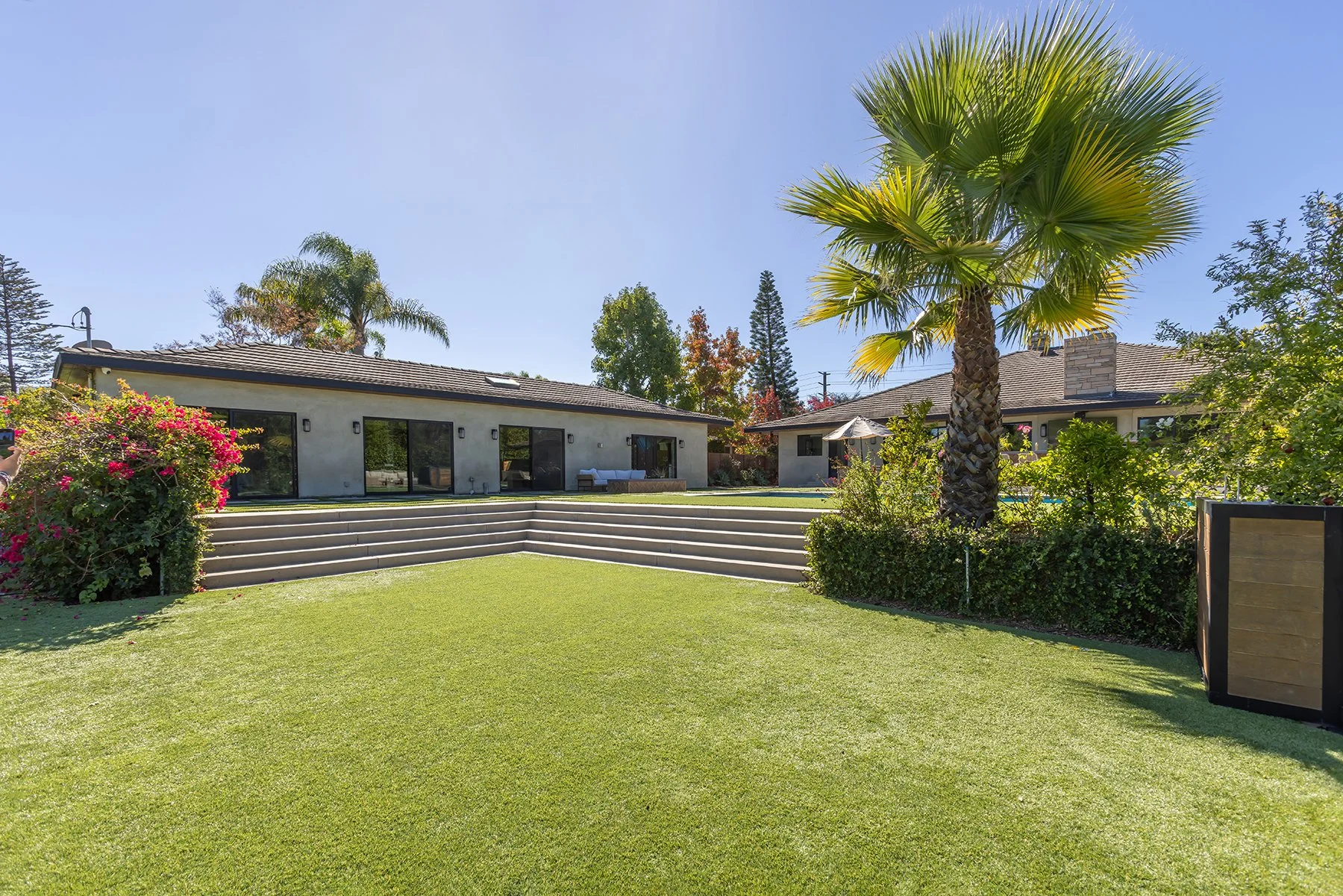
CULVER CITY · HOME WITH LOT POTENTIALSTARTED AS
A remodel of the main house only
The lot offered more than the original plan accounted for
The focus was improving the main house. But the lot had rear yard potential that changed the long-term value equation entirely.
WHAT CHANGED
The real opportunity wasn't just within the house — it was on the property. Adding an ADU expanded function and long-term flexibility.
FINAL DECISION
Remodel the existing home + build new detached ADU

WESTWOOD · FAMILY HOME EXPANSIONSTARTED AS
A rebuild question — not enough space
The existing structure was the asset — expansion was more strategic than replacement
Rebuilding was considered. But the existing framework allowed vertical growth without starting over — adding space without losing what the home already was.
WHAT CHANGED
The structure supported expansion. Building up and adding an ADU component solved the space problem without a full replacement.
FINAL DECISION
Major addition — second story + pool + expanded footprint

HANCOCK PARK · HISTORIC PROPERTYSTARTED AS
Remodel vs rebuild — significant upgrades needed
Preservation was the priority — but modern living required more space
The home's architectural identity was part of its value. The decision shifted toward preserving what mattered while expanding through a new ADU structure rather than touching the historic fabric.
WHAT CHANGED
A new ADU allowed the historic home to be preserved intact while adding the space and function the property needed.
FINAL DECISION
Historic restoration + new ADU construction
COST REALITY
What ADUs actually cost
in Los Angeles — and what drives it
These ranges reflect real ADU project costs in Los Angeles — not national averages or minimum starting numbers. What matters more than the range is what drives the cost on your specific property.
GARAGE CONVERSION$150k–$250k+
Most cost-effective entry point. Constrained by existing structure.
COST PER SQUARE FOOT$250–$350+
ATTACHED ADU$250k–$400k+
Requires structural integration with existing home.
COST PER SQUARE FOOT$300–$400+
DETACHED ADU$300k–$450k+
New foundation, full utility trenching, most flexibility.
COST PER SQUARE FOOT$350–$500+
TWO-STORY ADU$350k–$550k+
Maximum square footage, structural engineering intensive.
COST PER SQUARE FOOT$400–$550+
WHERE ADU BUDGETS GO WRONG
Most budget overruns don't come from design upgrades. They come from:
Utility capacity upgrades discovered late — after plans are already drawn
Site conditions that require grading, structural changes, or access solutions
Choosing an ADU type before confirming what the property actually supports
These are decisions made early — not adjustments made later.
Soft costs to plan for from the start
In addition to construction, ADU projects include professional and permitting expenses that should be budgeted before design begins — not discovered during permitting.
ARCHITECTURAL & DESIGN FEES
Plans, design development, construction document
STRUCTURAL ENGINEERING
Required for new foundations and attached structures.
LADBS PERMIT & CITY FEES
Building permits, plan check, and inspection fees.
SURVEYS & SITE REPORTS
Soils reports, surveys, and site-specific assessments.
TITLE 24 COMPLIANCE
Energy compliance reports required for all ADU permits.
SCHOOL DISTRICT IMPACT FEES
Where applicable — often overlooked until late in permitting.
What most ADU budgets don't account for: Utility upgrades — electrical panel replacement, sewer capacity expansion, separate meter installation — are among the most common cost drivers in Los Angeles ADU projects. They're rarely visible at the start and consistently appear once construction begins. A proper site evaluation surfaces these before they become surprises.
LOS ANGELES COMPLEXITY
Why ADUs are more complex
here than anywhere
Los Angeles has some of the most permissive ADU laws in California — but local conditions, neighborhood overlays, and utility infrastructure add layers of complexity that vary dramatically by property and location.
We've evaluated hundreds of properties across Los Angeles — and the pattern is always the same: the cost isn't driven by the ADU itself. It's driven by what the property requires to support it.
Pacific Palisades COASTAL ZONE
Mar Vista INFILL & ADU POTENTIAL
Studio City ,Hollywood Hills HILLSIDE & WUI
Calabasas HOA & GATED
Hancock Park HISTORIC OVERLAY
Brentwood TRADITIONAL &· HIGH VALUE
Culver City Infill · ADU Active
Westwood Family · Expansion
Coastal Commission Oversight
Properties in Pacific Palisades and Malibu-adjacent areas require Coastal Commission approval in addition to LADBS permits. For ADU projects in coastal zones, this adds a separate review layer that can extend timelines meaningfully and shapes what can be built on the lot.
Utility Infrastructure Capacity
Many older LA properties don't have the electrical or sewer capacity to support an ADU without significant upgrades. Panel replacements, sewer lateral evaluations, and separate meter installations can add meaningfully to project cost.
Setback & Lot Coverage Rules
Los Angeles ADU regulations allow reduced setbacks in many cases — but local zoning, specific plan areas, and HOA restrictions can override state minimums. What's allowed statewide may not be allowed on your specific lot.
HOA Restrictions
HOA-governed communities — common in Calabasas, gated neighborhoods, and planned communities — may restrict ADU construction entirely or require design board approval that significantly extends timelines.
Historic Overlay Requirements
Properties in historic preservation overlay zones face additional review for any new construction on the lot — including ADUs. Hancock Park and similar neighborhoods require careful coordination with the Office of Historic Resources.
Short-Term Rental Restrictions
Los Angeles restricts short-term rentals (Airbnb, VRBO) through the Home Sharing Ordinance. ADUs built with short-term rental income as the financial basis need to account for these regulations from the start.
Owner-Occupancy Rules
Some ADU configurations require the property owner to occupy either the main home or the ADU. Understanding occupancy requirements before design begins ensures the project aligns with how the property will actually be used.
OUR SIGNATURE APPROACH
We evaluate before
we recommend.
Our role is not to sell you an ADU. It's to help you understand whether an ADU makes strategic sense for your specific property — and if it does, which type and what scope aligns with your goals. That evaluation happens before design, before budget commitments, before anything. We help homeowners plan ADU projects with clarity, realistic budgeting, and a process that accounts for both the obvious and hidden costs.
01
PROPERTY EVALUATION
We assess lot conditions, utility capacity, zoning, and setbacks before any path is recommended.
02
FINANCIAL MODELING
We model the real ROI for your use case — rental, multigenerational, or resale — before you commit to scope.
03
TYPE SELECTION
We recommend the ADU type that fits your property, budget, and goals — not the one that's easiest to build.
04
REALISTIC PLANNING
We build timelines and budgets that account for LA permitting complexity — not best-case scenarios.
FREQUENTLY ASKED
Questions we hear before every ADU project
Honest answers to what most homeowners are actually wondering.
-
Most ADU projects in Los Angeles fall between $150,000 and $550,000+ depending on type, size, and site conditions. Garage conversions generally start lower; detached and two-story ADUs sit at the higher end due to new foundations, utility trenching, and structural engineering. The ADU cost in Los Angeles varies widely because site conditions — utility capacity, access, grading — differ dramatically from one property to the next. A proper property evaluation is the only reliable way to get a realistic number before design begins.
-
Utility upgrades. Electrical panel replacements, sewer capacity expansions, and separate meter installations are among the most common budget drivers — and the least visible at the start. They don't appear in early estimates but consistently appear once construction begins. A proper site evaluation before design begins is the most reliable way to surface these early.
-
Not always — but it depends on the property and the ADU type. Some ADUs can share electrical and water connections with the main house. Others require panel upgrades, separate meters, or sewer capacity evaluations. The utility configuration should be assessed as part of early feasibility, not discovered during permitting.
-
State law allows ADUs on most residential lots in California — including Los Angeles. But local conditions matter. HOA restrictions, historic preservation overlays, specific plan areas, and utility capacity can all affect what's actually feasible on a given property. Statewide allowance doesn't always translate to straightforward approval on every lot.
-
Generally yes — especially in higher-value LA markets where buyers respond to additional rental income potential and flexibility. The degree depends on the ADU type, quality of construction, and neighborhood. A well-executed detached ADU on a strong lot typically adds more value than a constrained garage conversion. The financial case should be modeled for your specific property before committing to scope.
-
Long-term rentals are generally allowed. Short-term rentals — Airbnb, VRBO — are regulated under the Los Angeles Home Sharing Ordinance, which restricts short-term rentals to the owner's primary residence. If short-term rental income is part of your financial case, the regulatory framework needs to be understood before the project is designed around that assumption.
-
In most cases no — California state law eliminated parking requirements for ADUs in many situations, including properties within half a mile of public transit, when a garage is being converted, or when the ADU is attached to the primary home. However, parking requirements can still apply in certain contexts. This should be confirmed early in the planning process based on your specific property and ADU type.
-
Most ADU projects take 8–14 months from initial planning to completion. Permitting through LADBS typically takes 3–6 months — construction ranges from 5–8 months depending on type and complexity. Properties with utility upgrades, site access challenges, HOA review, or historic overlay requirements may take longer. Building realistic timelines from the start — not best-case scenarios — is part of how we plan every project.
Most ADU questions get answered
in one property walkthrough
NEXT STEP
If you're considering an ADU in Los Angeles and want a realistic understanding of what your property actually supports — before design fees are spent and plans are drawn — a focused consultation is where that clarity starts.
Most homeowners come in thinking they know which type they want. The property usually has a different answer.
No pressure. No pitch. Just an honest evaluation of what your property supports.