
REMODELING IN PHASES
FEELS FINANCIALLY SAFER.
OFTEN IT COSTS MORE THAN EXPECTED.
LOS ANGELES · DECISION GUIDEBefore you decide how to sequence a remodel, understand the real cost of both approaches for your specific project and property.
DOING WORK TWICE IS ALMOST ALWAYS MORE EXPENSIVE THAN DOING IT ONCE — AND MOST HOMEOWNERS DON'T REALIZE THIS UNTIL THEY'RE ALREADY IN THE SECOND PHASE.
THE REAL DECISION
You're not choosing between
big and small. You're choosing between
coordinated and fragmented.
Most homeowners think about the remodel vs phases decision as a financial one — spread the cost, reduce risk, live in the home longer before committing to full scope. That logic makes sense on the surface.
What it misses is the cost of coordination. A whole-home remodel is designed once, permitted once, demolished once, and rebuilt in a single sequence. Every trade works together. Every system is planned together. Every finish is chosen with the full picture in mind.
A phased remodel does each of those things multiple times — at the cost of each phase, at the material and labor rates of each phase's year, and with the damage each phase does to the work that came before.
Phasing can absolutely make sense. But it should be an intentional strategy — not the default assumption that spreading a remodel over time is always safer or cheaper.
The right answer depends on your project scope, your property's systems, and what you're actually trying to achieve. This guide helps you make that decision with the real cost of both approaches on the table.
If you're still deciding whether to remodel at all, start with the remodel vs move guide — this page assumes you've already decided to stay and invest in the property.
One disruption vs repeated disruption
A whole-home remodel disrupts the household once — intensely, for a defined period. Phasing means living through construction multiple times, often with longer cumulative disruption than doing it all at once.
One planning cycle vs multiple
Design fees, architect coordination, structural engineering, permit applications — these are costs that attach to each phase. A whole-home remodel pays them once. A phased remodel pays them proportionally for each phase.
Inflation works against phasing
A phase two deferred by two or three years is a phase two priced at future rates — for the same scope estimated at today's rates. The apparent financial benefit of spreading the cost often disappears once this is factored in.
Systems don't respect phase boundaries
Electrical panels, plumbing runs, HVAC ducting, and structural systems don't divide neatly into phases. Touching them in phase one often means revisiting them in phase two — paying twice for work that could have been done once.
THE FINANCIAL REALITY
Whole Home Remodel
Everything designed, permitted, and built in a single coordinated sequence. Higher upfront cost — lower total cost per square foot and lower cumulative disruption.
FULL REMODEL
Design and permit cycles Once
Contractor mobilization Once
Demolition events Once
Finish coordination All together
Inflation exposure Minimal
Construction disruption Intense — once
Cost per sqft Lower
Remodeling in Phases
Scope divided across multiple projects over time. Lower per-phase cost — but higher cumulative cost when all phases are completed and true costs are accounted for.
PHASED REMODEL
Design and permit cycles Per phase
Contractor mobilization Per phase
Demolition events Per phase
Finish coordination Across years
Inflation exposure Per deferred phase
Construction disruption Repeated
Cost per sqft. Higher
THE REAL COST OF DOING IT TWICE
What phasing actually
costs that most estimates don't show
Each of these costs appears in phased remodels consistently — and rarely appears in the original estimate for phase one. Understanding them before committing to a phased approach is the starting point for an honest decision.
1
Opening walls twice
WHAT YOU PLANKitchen remodel now. Bathrooms next year when budget allows.
WHAT IT ACTUALLY COSTSDemo, structural work, drywall, and patching costs attach to every phase that opens walls. When the bathroom phase opens walls that connect to the kitchen you already finished, you're paying to protect, remove, and restore work you already paid for. The cost of reopening a finished space is rarely zero.
2
Flooring and finish continuity
WHAT YOU PLANInstall floors in phase one. Match them in phase two.
WHAT IT ACTUALLY COSTSMaterials get discontinued. Dye lots change. The hardwood that was available in year one may not match in year three — and matching a running floor across phases requires either stockpiling material upfront or accepting visible transitions. Finish continuity across phases is a real design problem that most homeowners discover too late.
3
HVAC, electrical, and plumbing coordination
WHAT YOU PLANTouch the kitchen systems now. Upgrade the rest when you do the rest of the house.
WHAT IT ACTUALLY COSTSMechanical systems run throughout the house. When you upgrade the kitchen electrical in phase one and the rest of the panel in phase two, you're often touching the same infrastructure twice. Panel capacity planned for a full remodel in phase one is a different calculation than panel capacity planned for a kitchen only. Under-planning systems in phase one creates expensive rework in phase two.
4
Contractor mobilization costs
WHAT YOU PLANThe contractors are already familiar with the house. Phase two should be easier.
WHAT IT ACTUALLY COSTSEvery mobilization — setup, site protection, material staging, crew coordination — has a cost that doesn't scale down for smaller phases. A contractor who mobilizes twice charges mobilization costs twice. In a whole-home remodel, that cost is absorbed into a single project. Mobilization costs are largely fixed regardless of phase size.
5
Inflation on deferred phases
WHAT YOU PLANDo phase two when we have the budget — probably in two or three years.
WHAT IT ACTUALLY COSTS"A phase two deferred by two or three years is a phase two priced at future rates — for the same scope estimated at today's rates. The apparent financial benefit of spreading the cost often disappears once this is factored in."
6
Repeated design and permit fees
WHAT YOU PLANEach phase is a separate project. Costs are separate too.
WHAT IT ACTUALLY COSTSArchitect fees, structural engineering, permit applications, and LADBS processing fees attach to each permitted phase. A whole-home remodel pays these costs once across the full scope. Three phases pay them three times — proportionally smaller per phase, but meaningfully larger in aggregate. Design and permit fees are a fixed overhead that multiplies with phasing.
WHEN PHASING IS THE RIGHT MOVE
Phasing makes sense
when it's intentional — not accidental
There are real situations where phasing a remodel is the right strategic decision. The difference between smart phasing and expensive phasing is whether the approach was chosen deliberately or defaulted into.
FINANCIAL STRATEGY
Budget genuinely can't support full scope
When the alternative to phasing is not remodeling at all, phasing is clearly better — even with the additional costs. The key is planning the phases correctly so work done in phase one doesn't create rework in phase two.
LIFE STAGE
Intentional pacing over a defined timeline
Some homeowners choose to improve their home gradually over years as a deliberate lifestyle choice — not a financial constraint. When this is the intention from the start and the phases are planned to minimize rework, it can be executed successfully.
PRE-SALE STRATEGY
Selling before full scope is completed
When the plan is to improve specific areas and sell — not to complete a whole-home remodel — phasing is the right framing. The investment is targeted, the timeline is defined, and the second phase may never happen.
PRESERVATION
Preserving usable parts of the home
When part of the home is in genuinely good condition and the improvement is targeted to specific areas, phasing can preserve value in what already works rather than replacing it unnecessarily.
SCOPE ISOLATION
The phases are genuinely independent
A guest bathroom that shares no systems, walls, or finishes with the rest of the planned work can be done as a true standalone phase without material cost consequences. The test: does phase one touch anything phase two will also touch?
UNCERTAINTY
Long-term plans aren't confirmed yet
When major life decisions — relocating, expanding the family, downsizing — are genuinely unresolved, doing a full remodel before those decisions are made carries its own risk. Targeted improvements while plans clarify can be the right call.
The honest framing: Phasing is a legitimate strategy when it's chosen deliberately with a clear understanding of the true costs. It becomes expensive when it's chosen by default — because the upfront cost of a full remodel feels large and the future cost of doing work twice feels abstract.
THE PATTERNS THAT CONSISTENTLY CREATE PROBLEMS
The remodels that
most often regret phasing
These patterns appear consistently in phased remodels that end up costing more than a whole-home approach would have — and creating more disruption, not less.
Kitchen now, floors later
The kitchen install requires protecting or working around existing floors. When the floors are finally done, the kitchen transitions become visible and awkward. The fix costs more than doing both together would have.
"We'll eventually open this wall"
Phase one is designed around a wall that will come down in phase two. It never does — because reopening finished work is expensive and disruptive. The layout compromise that was meant to be temporary becomes permanent.
Bathroom now, plumbing later
Plumbing runs throughout the house. Upgrading one bathroom without addressing the broader plumbing situation creates a system that was never fully designed — and rework when the full plumbing scope is eventually confronted.
Phase two that never happens
Phase one is designed with phase two in mind — systems undersized, finishes chosen for continuity with work that hasn't started, spaces left incomplete. Phase two is deferred indefinitely. The house lives in a permanent state of incomplete renovation.
Cosmetic first, systems later
Beautiful new surfaces on top of an aging electrical panel, old plumbing, and undersized HVAC. When the systems phase arrives, everything that was finished has to be opened up again — or worked around expensively.
Addition planned without infrastructure
A room addition that shares utilities with the main house — built before the house's electrical, HVAC, and plumbing were sized to support it. The systems that were adequate before the addition aren't adequate after — and upgrading them requires reopening finished work.
HOW TO DECIDE
Five questions
that clarify the decision
The right answer — whole home or phased — depends on your specific project, property, and financial situation. These questions surface the factors that consistently shift the decision one way or the other.
If the answers point toward phasing, the next step is planning the phases correctly — not just deciding to phase. How the phases are scoped, sequenced, and designed determines whether phasing saves money or costs more.
Do the planned phases share any walls, systems, or finishes?
If yes → full remodel is likely more cost-effective
If no → phasing may work cleanly
Are the electrical, plumbing, and HVAC systems sized for full scope — or just the first phase?
If under-sized → plan systems for full scope upfront even if phasing finishes
If adequately sized → phasing is lower risk
What is the realistic timeline between phases?
If 2+ years → inflation and finish discontinuity become material concerns
If under 12 months → phasing risk is lower
Is phasing a financial strategy or a financial constraint?
If strategy → plan deliberately to minimize rework costs
If constraint → model the true cumulative cost before committing
What happens if phase two never gets done?
If phase one is designed for phase two → risk of permanent incompleteness
If phase one is complete on its own → phasing is lower risk
REAL PROJECTS · REAL DECISIONS
How the full vs phased
decision actually resolved
Three projects where the phasing question came up — and where the structural conditions, systems reality, or permitting complexity answered it. Each project ended up as a coordinated full scope for a different reason.

HOLLYWOOD HILLS · HOME REMODELFULL REMODEL
The layout remodel couldn't be done in isolation from the systems behind it.
The goal was to open the layout — remove walls, connect the kitchen to the living areas, improve how the home flowed. But the walls that needed to come down were the same walls carrying the electrical and HVAC. Opening them meant touching everything.
WHAT CHANGED
A targeted layout remodel became a full structural and systems project once the wall conditions were understood. Doing it in phases would have meant opening the same walls twice — paying for demo, patching, and finish restoration twice.
FINAL DECISION
Full structural remodel — layout, systems, and finishes coordinated in one scope
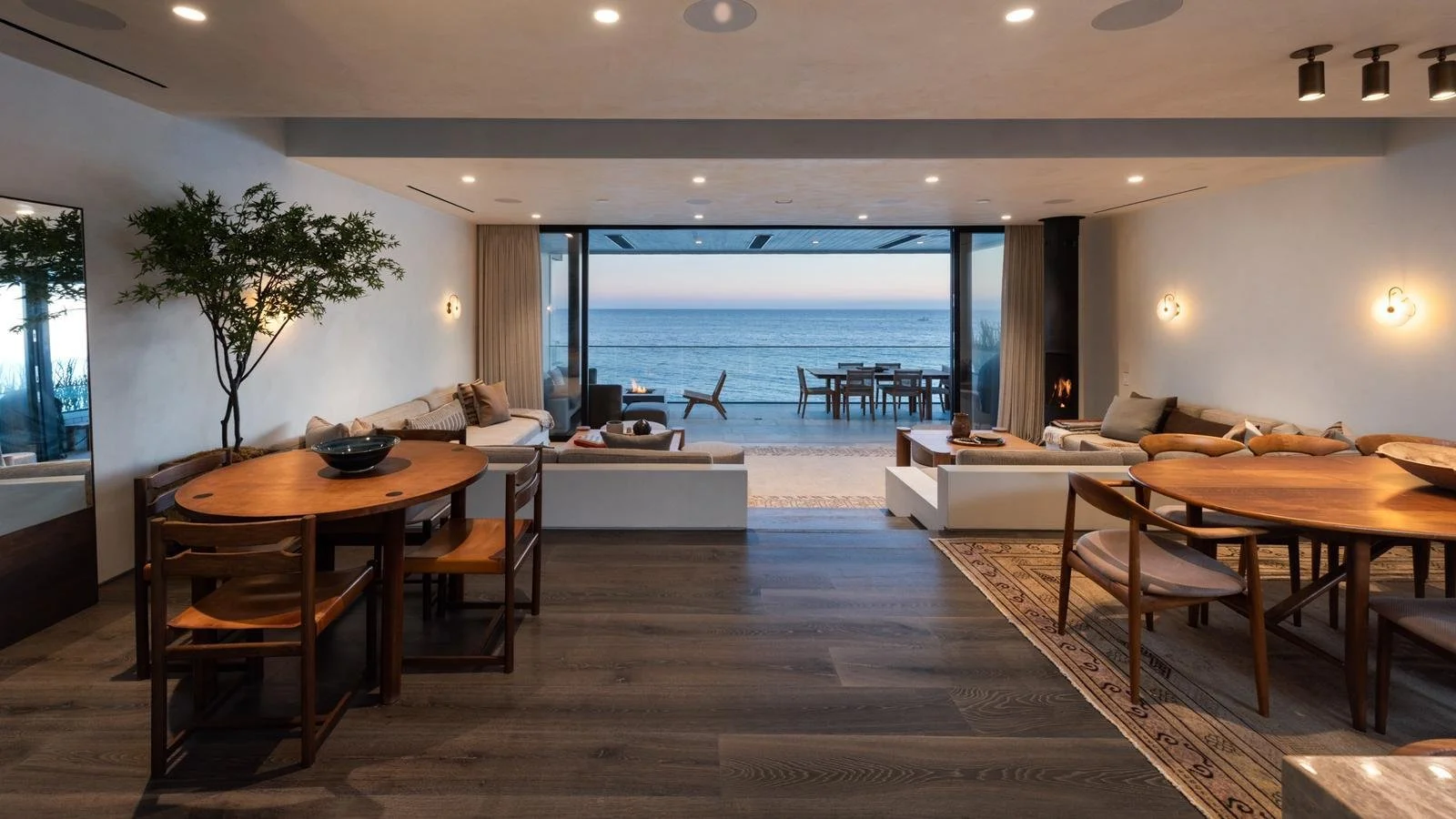
MALIBU · BEACHFRONT CONDO REMODELFULL REMODEL
What looked like a cosmetic update became a full gut remodel once the walls opened.
The plan was a surface update — new finishes, updated kitchen, refreshed bathrooms. Once walls opened, the systems behind them were outdated, undersized, and near end-of-life. The cosmetic scope expanded significantly once the real conditions were understood.
WHAT CHANGED
Doing the cosmetic work first and the systems later would have meant opening finished walls to get to the infrastructure behind them. The phasing logic collapsed once the real scope was visible. Everything was completed in a single coordinated project.
FINAL DECISION
Full gut remodel — systems replaced alongside finishes, not after
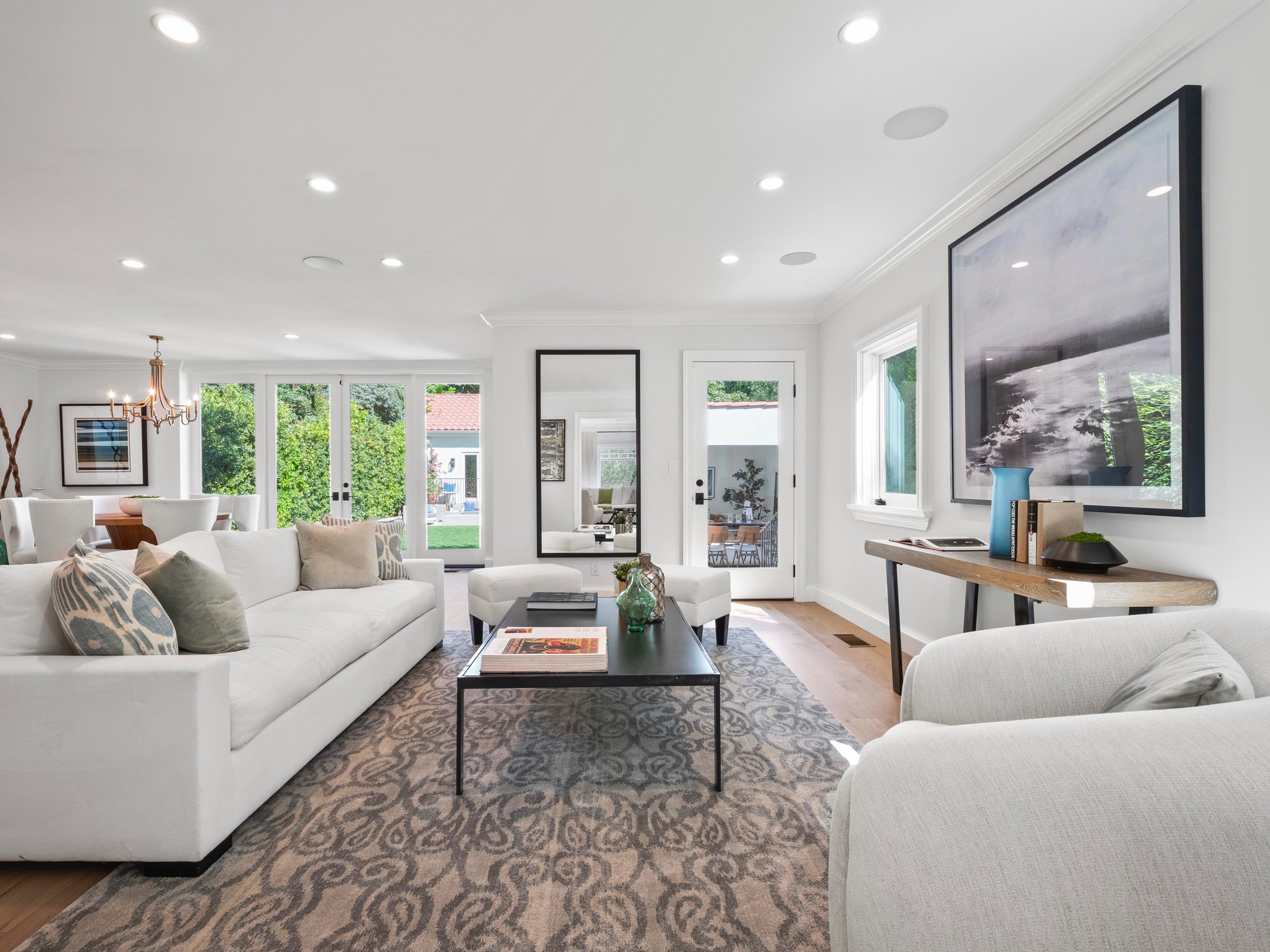
HANCOCK PARK · HISTORICAL RESTORATION + ADUFULL SCOPE
Historic preservation and permitting made phasing significantly more expensive than a single coordinated scope.
A historic overlay property requires design review and HPOZ approval for any visible changes. Each phase that required permits would have triggered a separate review process — adding months and fees to each phase independently. The coordination overhead made phasing genuinely more expensive than a single coordinated scope.
WHAT CHANGED
Permitting reality — not just construction scope — determined the sequencing. One approval process covering restoration and ADU construction was dramatically more efficient than two or three separate applications through the same review board.
FINAL DECISION
Historic restoration + ADU — all scopes coordinated through a single permit process
COST REALITY
What the cost difference
actually looks like in Los Angeles
These ranges are directional — every project and property is different. What's consistent is the pattern: whole-home remodels cost less per square foot than the cumulative cost of phased remodels covering the same scope.
WHOLE HOME REMODEL
$300k–$800k+
Single coordinated scope — design, permit, and construction paid once.
One design cycle and permit application
One mobilization and site setup
Systems planned and sized for full scope
Finishes selected with the complete picture
No inflation exposure between phases
REMODELING IN PHASES
More per sqft
Same total scope — but overhead multiplied across each phase.
Design and permit fees per phase
Mobilization costs per phase
Potential rework where phases connect
Finish continuity challenges across years
Inflation on deferred phase costs
The variable most phased remodel budgets don't account for: The cumulative overhead of doing the same fixed costs — design, permits, mobilization — multiple times instead of once. On a project that would cost $500K as a whole-home remodel, these overhead costs alone can materially increase the total phased cost — before rework, finish replacement, or inflation are factored in.
OUR APPROACH
We help you plan
the right sequence — not just the right project.
Whether a whole-home remodel or a deliberately phased approach is right for your property, the starting point is the same: understand the full scope, the systems, and the real cost of both approaches before committing to either. That conversation changes outcomes significantly.
01
SCOPE MAPPING
Full scope defined first — then evaluated for whether phasing is structurally and financially viable.
02
SYSTEMS EVALUATION
Electrical, plumbing, and HVAC assessed for what full scope requires — before phase one locks in undersized infrastructure.
03
TRUE COST COMPARISON
Real cost of full remodel vs real cumulative cost of phasing — including overhead, inflation, and rework risk.
04
PHASE PLANNING
If phasing is the right strategy, phases designed to be complete on their own — not dependent on work that may never happen.
FREQUENTLY ASKED
Questions we hear before every remodel planning conversation
Honest answers to what most homeowners are working through.
-
All at once is almost always cheaper per square foot when the full scope is eventually completed. The fixed overhead costs — design, permits, mobilization — are paid once in a whole-home remodel and multiple times in a phased approach. Add inflation on deferred phases and potential rework where phases connect, and the cumulative cost of phasing the same scope consistently exceeds the cost of a coordinated whole-home remodel. The exception is when the phases are genuinely independent — sharing no systems, walls, or finishes — and the timeline between phases is short.
-
Sometimes — but it depends on how the kitchen connects to the rest of the planned work. If the kitchen shares plumbing, electrical, or HVAC with areas planned for phase two, upgrading those systems only for the kitchen creates infrastructure that will need to be revisited when the broader scope begins. If the kitchen is genuinely isolated, a standalone kitchen remodel can work as a true phase. The test is whether anything done in phase one will need to be touched again in phase two.
-
The most reliable approach is to specify all finishes for the full scope upfront and purchase enough material for continuity — particularly for flooring, tile, and specialty materials that may be discontinued or change dye lots over time. For finishes that can't be pre-purchased, selecting materials that are likely to remain available in standard colorways reduces discontinuity risk. The honest answer is that perfect finish continuity across phases more than a year apart is difficult and sometimes impossible.
-
Plan systems for full scope even if you're only building phase one finishes. An electrical panel sized for the full remodel, plumbing rough-in positioned for future bathrooms, and HVAC infrastructure designed for the complete layout costs modestly more in phase one but eliminates expensive rework in phase two. The biggest mistake in phased remodels is designing phase one as if phase two doesn't exist — and then paying to undo that in phase two.
-
The premium varies by project, but the consistent pattern is 15–30% higher total cost for phased remodels covering the same scope as a whole-home approach — accounting for duplicated overhead, inflation on deferred phases, and rework at phase connections. The actual number depends on how the phases are scoped, how connected they are, and how much time passes between phases.
-
It depends on the neighborhood, the condition of the home, and how competitive the local market is. In high-value Los Angeles neighborhoods, well-executed structural remodels that improve layout and systems typically return strong resale value. Cosmetic updates on top of structural problems typically don't. The most important question is whether the remodel creates value that the market will recognize — and that answer is neighborhood-specific, not universal.
-
If the budget genuinely doesn't support full scope, phasing is better than not remodeling. The question is how to phase intelligently — starting with systems infrastructure, designing phase one to be complete on its own, specifying materials for continuity, and not leaving phase one in a state that depends on a phase two that may be deferred indefinitely. A well-planned phased remodel is significantly better than an unplanned one.
The sequencing decision
should come before the design decision
WHERE TO START
Whether a whole-home remodel or a phased approach is right for your project, the starting point is understanding your full scope, your systems, and the real cost of both approaches for your specific property.
Many homeowners initially assume phasing is the safer financial path. Sometimes it is. Often the full evaluation changes the economics — and the sequencing plan changes with it.
That conversation belongs before design begins — not after phase one is finished and phase two is already more expensive than it should be.