

THE QUESTION ISN'T
WHETHER TO REMODEL.
IT'S WHETHER TO STAY.
LOS ANGELES · DECISION GUIDEBefore you spend $300K–$800K on your home, make sure this is still the right home for your future.
MOST HOMEOWNERS START THINKING ABOUT REMODELING BEFORE THEY'VE ANSWERED THE MORE IMPORTANT QUESTION — AND THE WRONG ANSWER AT THIS STAGE IS THE MOST EXPENSIVE MISTAKE YOU CAN MAKE.
THE REAL QUESTION
Most homeowners think they're deciding
whether to remodel. They're actually deciding
something much bigger.
Whether to reinvest in the life they've already built — or leave it behind and start over somewhere else. That's a different decision than picking a contractor or choosing a kitchen layout. And it deserves to be answered first.
The homeowners who get this wrong don't realize it until the remodel is finished. The house looks better. The systems work. But something still doesn't fit — and the $500K they spent didn't fix it, because the problem was never the house.
Not every house should be remodeled. But not every house should be left behind either. The answer depends on what you're actually trying to solve.
In Los Angeles, this decision carries more financial and emotional weight than almost anywhere else. Mortgage rates locked in at 2–3% make moving genuinely expensive. Inventory is constrained — there may not be a better house to move to. And the lot, the neighborhood, the proximity — these things don't transfer.
This guide is built for the moment before the remodel decision. Before plans are drawn. Before contractors are called. When the real question is still open.
You're not just choosing a project
You're deciding whether this property is the right foundation for the next chapter of your life. That question should come first — not after the architect is engaged.
The wrong decision gets expensive fast
Remodeling a house you should have left — or moving from a house you should have fixed — both cost hundreds of thousands of dollars in the wrong direction. The earlier this question is answered honestly, the less it costs.
LA makes this harder than most markets
Locked-in mortgage rates, constrained inventory, and high transaction costs mean that moving in Los Angeles is rarely as simple as it looks. But staying can also be a trap. The math needs to be done before the emotion takes over.
Most remodel conversations start too late
Most remodel conversations begin after the stay-or-move decision is already made. We think that conversation should happen earlier — because the answer changes everything that comes after it.
A SIMPLE WAY TO THINK ABOUT IT
SIGNAL
The location is right
Staying becomes much stronger — the lot and neighborhood are doing the work.
SIGNAL
The layout is wrong but solvable
Remodeling addresses the problem without the cost of moving.
SIGNAL
The mortgage delta is significant
A locked-in rate at 2–3% makes moving permanently more expensive every month.
SIGNAL
The lot limits everything
When the property itself is the constraint, moving or rebuilding may be the only real path.
SIGNAL
Life stage has shifted completely
When neighborhood, commute, and proximity needs have fundamentally changed, moving becomes more realistic.
WHY THIS DECISION IS DIFFERENT
In Los Angeles, the
stakes are unusually high
Most markets make moving a relatively straightforward financial calculation. Los Angeles doesn't. The combination of locked-in mortgage rates, high transaction costs, and constrained inventory makes the remodel vs move decision more consequential here than almost anywhere else.
Understanding the real financial picture — on both sides — is the starting point for an honest answer.
2–3%
Locked-in mortgage rates
Many LA homeowners refinanced at historic lows. Moving means giving that rate up — often permanently. The monthly payment difference on a new mortgage can be $2,000–$4,000+ per month.
8–10%
True cost of selling in LA
Agent commissions, transfer taxes, staging, repairs, and closing costs typically total 8–10% of sale price. On a $2M home, that's $160K–$200K before you've bought anything new.
$300–800K
Typical full home remodel range in LA
The cost of a meaningful remodel varies widely — but most full-scope projects in Los Angeles fall in this range depending on structural scope, systems, and finish level.
Limited
LA inventory reality
In most desirable LA neighborhoods, quality inventory is genuinely constrained. Moving doesn't guarantee a better option exists — especially at a similar or lower price point.
WHEN STAYING MAKES SENSE

Remodeling wins when
the property is the right foundation
A remodel is the right move when the house itself isn't the problem. When the lot, the location, the neighborhood, and the structural bones are strong — and what needs to change is how the space works.
LOCATION
The neighborhood is irreplaceable
School district, walkability, proximity to work or family, community identity — if these are exactly right and hard to replicate elsewhere, the property is worth investing in even if the house itself needs significant work.
THE PROBLEM
The issues are solvable with construction
Layout, space, systems, finishes — these are construction problems. If the fundamental issues can be addressed through remodeling, the investment stays in the property rather than being lost to transaction costs.
THE PROPERTY
The lot and location have long-term value
In Los Angeles, land value frequently exceeds structure value. A property with strong lot characteristics — size, orientation, neighborhood trajectory — is often worth improving even when the existing structure needs significant investment.
ATTACHMENT
The emotional connection reflects real value
Not all emotional attachment is bias. Sometimes it reflects genuine, rational value — community, memory, identity, proximity — that can't be replicated by moving to a technically better house somewhere else.
FINANCIAL REALITY
The mortgage math doesn't support moving
A locked-in rate at 2.5–3% that would be replaced by 6–7% on a new purchase changes the monthly cost of living significantly. When moving means a permanent increase of $2K–$4K+ per month, remodeling often wins on pure financial logic.
INVENTORY
There's no better option available to move to
In constrained LA markets, the house you'd move to may not exist at a comparable price point — especially if your current property has appreciated significantly. Staying and improving may be the only realistic path to getting what you actually want.
"The homes worth remodeling are the ones where the location, lot, and neighborhood are doing more work than the structure."
When those things are right and the house isn't — construction solves the problem. When those things are wrong — construction doesn't.
WHEN MOVING MAKES SENSE
Moving wins when
the property is the wrong foundation
This is the section most contractor pages don't write. We do — because the honest answer for some homeowners is that no amount of remodeling fixes a fundamental mismatch between the property and the life being lived in it.
STRUCTURAL REALITY
The lot fundamentally limits what's possible
If setbacks, zoning, topography, or lot size prevent the expansion the home actually needs — a remodel can improve what exists but can't create what doesn't fit. At that point, the property itself is the constraint.
LAYOUT
The fundamental layout can never truly resolve
Some layout problems are construction problems. Others are structural realities — ceiling heights, stair placement, load-bearing walls, orientation — that a remodel can work around but never eliminate. If the layout is fundamentally wrong for how the home needs to function, construction can't fix it.
FINANCIAL LOGIC
Investment won't return relative to the area
Over-improving relative to the neighborhood ceiling creates a property that cost more to build than it will ever sell for. When the remodel investment can't be recovered through resale in the local market, the financial case for moving strengthens significantly.
SCALE
The remodel scope approaches what a better house costs
When the full cost of making the existing home right approaches the cost of buying a house that's already right — including the transaction costs of moving — the financial case for remodeling weakens significantly. This comparison should be made explicitly.
LIFE STAGE
The neighborhood no longer fits how life has changed
School districts, commute patterns, proximity to aging parents, lifestyle priorities — these shift over time. A neighborhood that was right ten years ago may genuinely not be right for the next chapter, and that's not something remodeling can solve.
CLARITY
Emotional attachment is masking practical reality
Sometimes the honest answer is that the attachment to the house is holding back a decision that the numbers and the lifestyle clearly support. This is worth examining directly — not because emotion doesn't matter, but because acting against clear practical reality is expensive.
The honest version: We don't assume remodeling is always the answer. Some properties genuinely aren't worth the investment required to make them right. Saying so directly — before plans are drawn and money is committed — is part of how we work.
THE FINANCIAL REALITY
What remodel vs move
actually costs in Los Angeles
Most homeowners compare the cost of a remodel to the cost of a new house. That's the wrong comparison. The right comparison includes every cost on both sides — including the ones that don't show up in early estimates. Every property is different — these ranges are directional, not universal. The real comparison depends on your financing position, the condition of the existing home, the neighborhood, and what the next property would realistically cost.
STAY AND REMODEL
True cost of remodeling
Full home remodel LA range $300k–$800k+
Temporary relocation (if needed) $30k–$80k
Design and architecture fees $40k–$120k
Permit and city fees $15k–$50k
Unexpected structural scope Variable
Mortgage rate preserved Locked in
Transaction costs None
MOVE TO A NEW HOME
True cost of moving in LA
Agent commissions (buy + sell) $80k–$200k
Transfer taxes and closing costs $30k–$80k
Staging and pre-sale repairs $20k–$60k
Moving costs and storage $5k–$20k
New home updates and improvements Variable
Mortgage rate increase $2k–$4k/mo more
Total transaction friction $135k–$360k+
The comparison most homeowners don't make: The true cost of moving in Los Angeles — agent fees, transfer taxes, rate difference, new home updates — frequently totals $200K–$400K+ before a single improvement is made to the new property. That number changes the remodel vs move calculation significantly when placed next to real remodel costs.
WHAT DOESN'T SHOW UP IN THE NUMBERS

The factors that
matter as much as cost
The financial comparison matters — but it doesn't make the decision. Some of the most important inputs to the remodel vs move question don't appear in any spreadsheet. They're worth examining directly, not leaving in the background where they drive decisions without being acknowledged.
The homeowners who make this decision well are the ones who look at both sides honestly — the numbers and the things that don't reduce to numbers.
Neighborhood identity and community
The relationships, routines, and sense of place built over years in a neighborhood don't transfer with a move. For many homeowners, these are among the most valuable things they own — and among the hardest to rebuild elsewhere.
School district and proximity
In Los Angeles, school district boundaries are real and consequential. A property in the right district — especially for families with children in or approaching school age — has a value that transcends the structure on the lot.
The life already built around the location
Commute patterns, proximity to aging parents, established routines, medical relationships, professional networks — these are built around an address. Moving disrupts them in ways that take years to rebuild.
The gap between attachment and practicality
Sometimes the most important conversation is about whether emotional attachment to the current property is aligned with practical reality — or masking it. Both are legitimate, but they lead to different decisions.
What the new house would actually need to be
The house you'd move to exists somewhere on a spectrum from "doesn't exist" to "exists but requires compromise." Knowing exactly what would need to be true about a new house — and whether that house is findable — is part of making the decision honestly.
THE WRONG DECISION GETS EXPENSIVE FAST
How both mistakes
actually happen
The wrong decision in either direction is expensive — and more common than most homeowners realize. Understanding how each mistake happens is part of avoiding it.
MISTAKE
Remodeling a house you should have left
The location, the lot, the neighborhood were wrong before the remodel and wrong after. The investment improved the house but not the fit. The decision to move still happens eventually — but now after a remodel that didn't return what it cost.
MISTAKE
Starting design before answering this question
Once plans are underway and fees are committed, changing direction costs real money. The stay-or-move question belongs before the architect conversation — not inside it.
MISTAKE
Moving from a house that just needed work
Transaction costs, a higher rate, and improvements to the new property absorb $300K+ before anything meaningful changes. The neighborhood, the school district, the community — those were actually right all along.
MISTAKE
Making the decision without the full financial picture
Most homeowners compare remodel cost to new house price. The right comparison includes every real cost on both sides — agent fees, transfer taxes, rate difference, and what the new property would actually need. That number changes the decision.
REAL PROJECTS · REAL DECISIONS
How the stay or move decision
actually resolved
Three homeowners who came in questioning whether staying made sense. Each decided to stay — for different reasons, with different solutions. The property, the finances, and what they were actually trying to solve led them there.
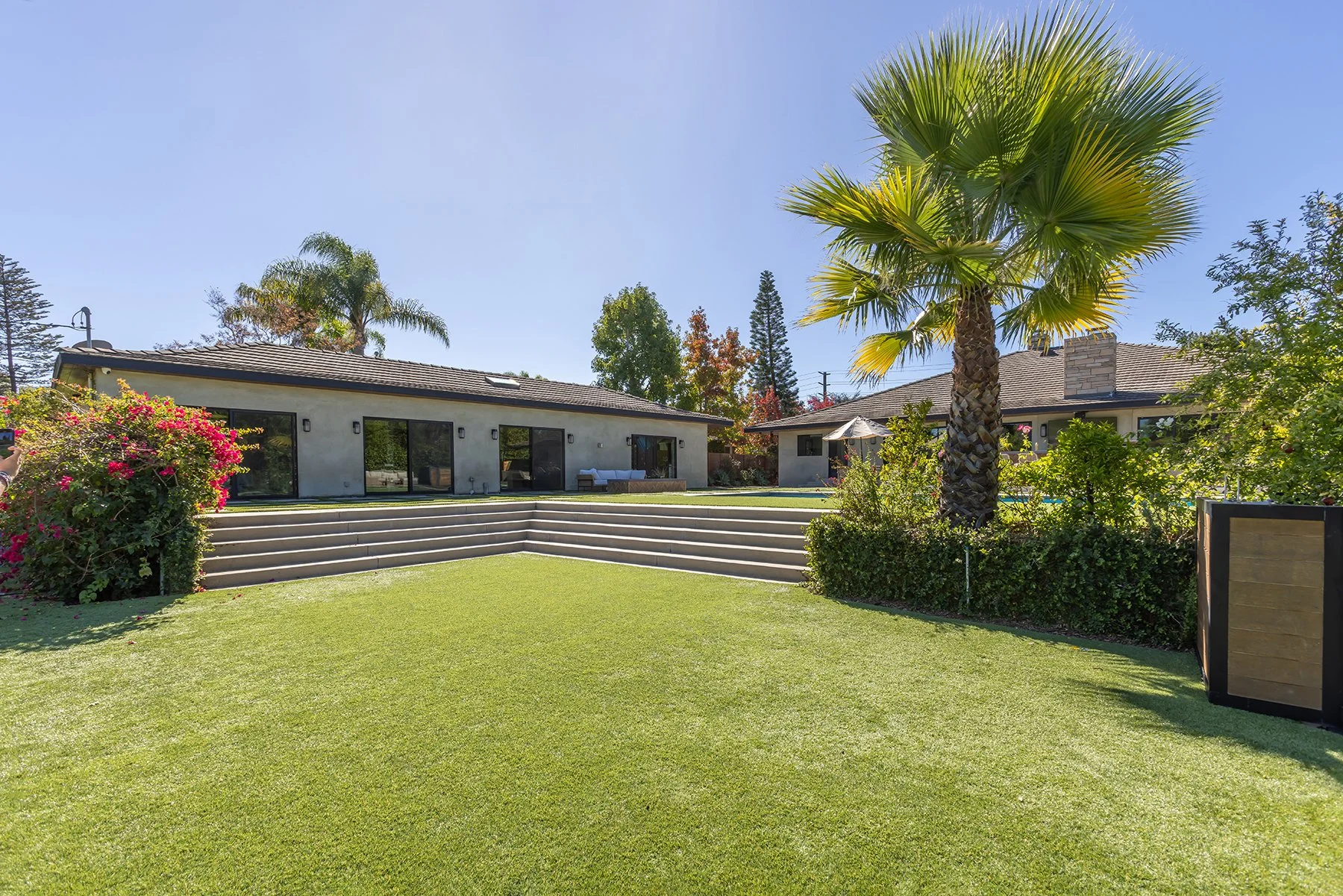
CULVER CITY · FULL HOME REMODEL + ADUSTAYED — REMODELED
The home felt outdated and cramped. Moving seemed obvious. The math said otherwise.
A locked-in rate, the right school district, and a neighborhood that couldn't be replicated elsewhere made the full cost of moving genuinely hard to justify. The question shifted from "should we move" to "what would it take to make this home work."
THE REAL QUESTION
Was the discomfort with the house worth the full financial and community cost of leaving? Once both sides were on the table, the answer was no.
FINAL DECISION
Full structural remodel + garage-to-ADU conversion — rethink the layout, stay

WESTWOOD · REMODEL + SECOND STORY + POOLSTAYED — EXPANDED
The home couldn't keep up with the family. Moving was on the table — until the structure was evaluated.
The layout was tight, rooms were closed off, and the house no longer fit how the family lived. Moving felt like the obvious answer. But the lot, the neighborhood, and the structural evaluation changed the direction — the existing frame could support a full second story without losing the backyard.
THE REAL QUESTION
Was the house fixable — or was the property itself the constraint? The evaluation showed the structure could carry what the family needed. The lot could do both: expand up and keep the outdoor space.
FINAL DECISION
Second story addition + full main level remodel + pool — stay and transform

MALIBU · FULL HOME REMODELSTAYED — RECONFIGURED
The location was irreplaceable. The layout was the problem — not the property.
Ocean-facing, well-sized, architecturally distinct. But the layout worked against it — walls blocked views, rooms felt disconnected, and the space didn't connect to the outdoor environment the property offered. The home didn't need more square footage. It needed to be rethought.
THE REAL QUESTION
Was this a problem with the house or the property? The property was exceptional. A structural reconfiguration — removing a load-bearing wall and reorganizing the main level — solved what square footage couldn't.
FINAL DECISION
Full structural remodel — open the layout, connect to the ocean, stay
OUR ROLE IN THIS DECISION
We help you answer
the question before the question.
Most contractors only get involved after the stay-or-move decision is made. We think that's too late. The most expensive mistakes in this category happen before a contractor is ever called — and the clearest thinking happens when the financial and structural reality of both options is on the table at the same time.
01
PROPERTY EVALUATION
What does this property actually support — structurally, financially, and in terms of what can be built or changed?
02
TRUE COST COMPARISON
Both directions mapped honestly — including the costs that don't appear in early estimates on either side.
03
HONEST RECOMMENDATION
We tell you which direction makes sense for your property, your finances, and what you're actually trying to solve — even if it means not doing a remodel.
04
CLEAR NEXT STEPS
If staying is right, we build a path forward. If moving is right, we say so before plans are drawn and money is spent.
FREQUENTLY ASKED
Questions we hear before every remodel vs move conversation
Honest answers to what most homeowners are actually thinking through.
-
The clearest signal is whether the fundamental issues with your property are construction problems or location problems. Layout, space, systems, and finishes are construction problems — remodeling can solve them. School district, neighborhood fit, commute patterns, and lot constraints are not construction problems — remodeling cannot solve them. If the location is right and the house is wrong, staying usually makes sense. If the location is wrong, no amount of remodeling fixes it.
-
The answer depends on what you're comparing. A full home remodel in Los Angeles typically costs $300K–$800K+. But moving has its own full cost — agent commissions, transfer taxes, staging, closing costs, and the rate difference on a new mortgage — that often totals $200K–$400K+ before you've improved the new property at all. When both sides are compared honestly, the gap between staying and moving is frequently smaller than it appears. The right comparison includes every real cost on both sides.
-
It depends on what you're remodeling, how much you're spending, and what the neighborhood ceiling supports. In high-value Los Angeles neighborhoods, well-executed structural remodels that improve layout, systems, and livability typically return strong resale value. Cosmetic remodels — new surfaces on old problems — often don't. The question of whether to remodel before selling should be answered with real comparable data from your specific neighborhood, not general advice.
-
Significantly. A mortgage locked in at 2.5–3% that would be replaced by 6–7% on a new purchase represents a permanent monthly cost increase of $2,000–$4,000+ depending on loan size. Over time, that difference is substantial — and it changes the financial logic of moving considerably. Many LA homeowners who would otherwise move are staying because the rate math simply doesn't work in favor of moving. This is worth calculating explicitly before making any decision.
-
More than most homeowners realize. In Los Angeles, the full cost of selling typically includes agent commissions on both buy and sell side, transfer taxes, title and escrow fees, staging costs, pre-sale repairs, and moving expenses. On a $2M home, these costs frequently total $160,000–$200,000 or more — before any improvements are made to the new property. This number is rarely in the conversation early enough.
-
Two thresholds matter. First: when the remodel cost approaches what the right house would cost to buy — including transaction costs on both sides. Second: when the remodel improves the house beyond the neighborhood ceiling — the price point at which comparable homes sell. When either of those thresholds is crossed, the financial case for staying and remodeling weakens. But the non-financial factors — location, rate, community — often still weigh in favor of staying even when the pure financial case is close.
-
Yes — but not to get a bid. A property walkthrough before the decision is made gives you the structural and financial reality of what staying would actually involve. That information belongs in the stay-or-move decision, not after it. Most homeowners make the stay decision first and then find out what it costs. The sequence should be reversed: understand the real cost of staying first, then decide. That conversation is exactly what our initial consultation is designed for.
This decision deserves
an honest conversation first
WHERE TO START
If you're weighing whether to remodel or move — and you want a realistic picture of what staying would actually involve for your specific property — that's exactly the conversation our initial consultation is built for.
We've had this conversation with hundreds of Los Angeles homeowners. Some of them remodeled. Some of them moved. Some of them rebuilt. The right answer is always property-specific — and it always starts before design does.
If you move into design without answering this question, you risk a $500K decision made on incomplete information.